
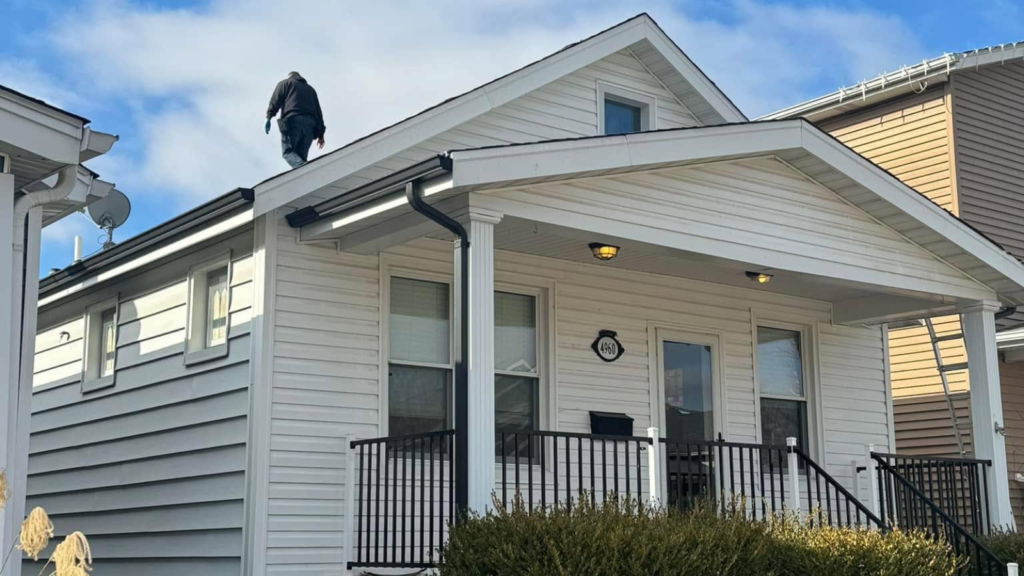
After a severe storm passes through Columbia, Illinois, one of the first things many homeowners do is step outside and look at their roof. If there are no missing shingles, fallen branches, obvious holes, or pieces of roofing material scattered across the yard, it can be tempting to assume everything is fine.
Unfortunately, storm damage is not always easy to see.
Some of the most serious roofing problems begin with subtle damage that is nearly impossible to identify from the ground. Hail can bruise shingles without creating obvious holes. Wind can break adhesive seals while leaving shingles sitting in their original positions. Flashing can loosen around chimneys and walls. Water can reach the roof decking or insulation long before a stain appears on the ceiling.
Understanding hidden roof storm damage can help homeowners recognize why a professional inspection may be valuable after severe weather, even when the roof appears normal from the driveway.
At Diamond Roofing & Exteriors, we help homeowners throughout Columbia, Waterloo, Alton, Bethalto, Godfrey, Chesterfield, Crystal City, Farmington, Festus, Herculaneum, Hillsboro, Mehlville, Oakville, Pevely, St. Charles, and St. Peters evaluate roofing systems after storms and identify problems that may otherwise go unnoticed.
Why Storm Damage Can Be Difficult to See
Your roof is designed with multiple layers that work together to protect your home.
Depending on the roofing system, these components may include:
- Shingles or metal roofing
- Underlayment
- Ice and water barriers
- Flashing
- Roof decking
- Fasteners
- Ridge caps
- Ventilation components
Damage can occur to any of these materials.
The problem is that homeowners can usually see only the outer surface of the roof from ground level.
A shingle may appear to be in place while its seal has been broken. A hail impact may weaken the fiberglass mat underneath the surface granules. Water may enter beneath flashing while the exterior metal still looks relatively normal.
This is why hidden roof storm damage deserves attention after significant hail, wind, rain, or falling debris.
Hail Damage Is Not Always Obvious
Hail is one of the most common causes of roofing damage during severe thunderstorms.
Large hail can create obvious damage, but smaller hailstones may leave subtle impact marks that are difficult to see without inspecting the roof closely.
On asphalt shingles, hail may cause:
- Granule loss
- Surface bruising
- Cracks
- Exposed asphalt
- Damage to the fiberglass mat
- Loosened protective material
A hail strike does not necessarily create an immediate leak.
Instead, it may weaken the shingle and reduce its ability to withstand future rain, wind, sunlight, and temperature changes.
Over time, damaged areas can deteriorate faster than the surrounding roofing materials.
Professional inspections can help identify hidden roof storm damage caused by hail before deterioration becomes more extensive.
Wind Can Damage Shingles Without Removing Them
Many homeowners associate wind damage with shingles lying in the yard.
However, shingles do not need to disappear from the roof to become damaged.
Strong winds can lift the edge of a shingle and break its adhesive seal. When the wind stops, the shingle may settle back into approximately the same position.
From the ground, nothing may look unusual.
But the shingle may now be more vulnerable to future storms.
Wind may also:
- Loosen fasteners
- Tear shingles around nail locations
- Damage ridge caps
- Bend flashing
- Loosen roof vents
- Pull gutters away from fascia
- Damage roof edges
Once the protective seal between shingles has been compromised, wind-driven rain may have an easier path beneath the roofing system.
A professional inspection can help identify lifted or creased shingles that homeowners cannot easily see.
Shingle Bruising Can Remain Hidden
One particularly difficult type of hidden roof storm damage is shingle bruising.
A hailstone may strike the roof hard enough to damage the material underneath the surface without completely breaking through it.
The area may feel soft when inspected professionally, but it may not be obvious from a photograph taken from the ground.
Over time, the damaged area can lose more granules and become increasingly vulnerable to sunlight and moisture.
This gradual deterioration is one reason storm-related roofing problems may not produce leaks immediately.
Granule Loss Can Be Easy to Miss
Asphalt shingles contain protective granules that shield the underlying material from ultraviolet exposure and weather.
Hail, falling debris, heavy rain, and normal aging can loosen these granules.
From ground level, small areas of granule loss may be difficult to identify.
Homeowners may instead notice granules collecting in:
- Gutters
- Downspouts
- Splash blocks
- Areas near the foundation
Some granule loss is normal, particularly with newer roofing materials. However, concentrated or unusual granule loss after a storm may indicate impact damage.
A roofing professional can evaluate whether the pattern appears consistent with storm damage or ordinary wear.
Flashing Damage May Be Nearly Invisible
Flashing protects some of the most vulnerable parts of a roofing system.
It is commonly installed around:
- Chimneys
- Skylights
- Plumbing vents
- Roof valleys
- Sidewalls
- Dormers
- Roof transitions
Strong wind, hail, falling debris, and temperature changes can loosen or damage flashing.
A small gap around a chimney may be nearly impossible to see from the driveway.
Unfortunately, that gap may be large enough for rainwater to enter.
Flashing-related hidden roof storm damage can eventually lead to wet decking, damaged insulation, mold, or interior stains.
Roof Valleys Can Hide Storm Damage
Roof valleys are formed where two roof slopes meet.
Because water from multiple sections of the roof flows toward these areas, valleys handle significant amounts of runoff during heavy rain.
Storms can damage:
- Valley shingles
- Metal flashing
- Underlayment
- Sealants
- Nearby fasteners
Leaves and debris may also accumulate in valleys after storms and interfere with drainage.
Damage in these areas is difficult to evaluate safely from the ground.
Because valleys carry so much water, even a relatively small problem can eventually create a significant leak.
Roof Vent Damage
Roof vents allow heat and moisture to leave the attic.
Hail and wind can damage vent covers, loosen fasteners, or affect the seals around them.
From the ground, a damaged vent may appear completely normal.
However, small cracks or gaps around the base can allow water to enter the attic.
Professional roof inspections should include ventilation components because they are common locations for hidden roof storm damage.
Pipe Boot Damage
Plumbing pipes extend through the roof and are typically protected by specialized flashing or boots.
These components may contain rubber that deteriorates naturally over time.
A storm can accelerate existing weakness.
Hail may crack the material, while wind may loosen surrounding roofing components.
Once the seal fails, water can travel down the pipe and into the attic.
Because plumbing vents are relatively small, homeowners rarely notice damage from ground level.
Ridge Cap Damage
The ridge is the highest point where roof slopes meet.
Special ridge cap shingles or materials protect this area.
Because ridge caps are highly exposed, they can receive significant wind and hail impact.
Storm damage may include:
- Cracks
- Missing granules
- Loose fasteners
- Lifted sections
- Broken seals
Even when ridge caps remain in place, they may no longer provide the same protection.
Damage Beneath the Shingles
Some storm damage occurs beneath the visible roofing surface.
Water may enter through a damaged shingle, flashing joint, or roof penetration and reach the underlayment.
If moisture continues farther, it may eventually reach the decking.
Roof decking can become:
- Soft
- Swollen
- Rotted
- Delaminated
- Moldy
These problems cannot normally be identified from the ground.
In some cases, they may not even be obvious from the roof surface.
Inspecting the attic can provide additional clues.
Attic Warning Signs of Hidden Storm Damage
Your attic can reveal roofing problems before they become visible in living spaces.
After a severe storm, homeowners can safely inspect accessible attic areas for warning signs.
Look for:
- Wet insulation
- Water stains
- Damp wood
- Musty odors
- Mold growth
- Rusted fasteners
- Water trails
- Visible daylight through unexpected openings
Do not touch electrical components or enter unsafe attic areas.
Evidence of moisture may indicate hidden roof storm damage that requires professional evaluation.
Why Ceiling Stains May Appear Later
Homeowners sometimes assume that a roof is fine because no ceiling stains appeared immediately after a storm.
However, water damage can take time to become visible.
Moisture may first:
- Enter beneath damaged roofing material.
- Reach the underlayment.
- Soak into roof decking.
- Travel along framing.
- Saturate insulation.
- Reach drywall.
- Create visible staining.
This process can occur gradually.
By the time a ceiling stain appears, moisture may already have affected several parts of the home.
That is why waiting for an interior leak is not always the best way to determine whether storm damage occurred.
Hidden Moisture Can Lead to Mold
Moisture trapped in an attic or wall system can create conditions where mold may develop.
Potential moisture sources include:
- Roof leaks
- Damaged flashing
- Wet insulation
- Poor ventilation
- Condensation
Storm damage that allows even small amounts of water inside can contribute to these conditions.
Addressing the source of moisture is essential.
Simply cleaning visible mold without repairing the roof may allow the problem to return.
Gutters Can Reveal Roof Damage
Your gutters can provide clues about roof conditions.
After a storm, homeowners may notice:
- Excessive shingle granules
- Dents from hail
- Loose gutter sections
- Damaged downspouts
- Debris accumulation
Dented gutters do not automatically mean the roof has been damaged, but they can indicate that hail or debris struck the property.
If gutters show significant impact after a severe storm, a professional roof inspection may be worthwhile.
Siding Damage Can Be Another Clue
Storm damage rarely affects only one part of the exterior.
Hail and wind can also damage:
- Siding
- Window trim
- Fascia
- Soffit
- Gutters
- Downspouts
- Exterior vents
If siding or metal components show impact marks, the roof may have experienced similar conditions.
At Diamond Roofing & Exteriors, evaluating the broader exterior can help us understand how a storm affected the property as a whole.
Why Ground-Level Inspections Have Limitations
Homeowners should absolutely inspect their properties after storms, but they should do so safely from the ground whenever possible.
Ground-level checks can identify obvious problems such as:
- Missing shingles
- Fallen branches
- Detached gutters
- Large holes
- Loose siding
- Visible debris
However, they cannot reliably reveal every roofing problem.
Subtle hail impacts, broken seals, flashing gaps, damaged pipe boots, and compromised underlayment require closer evaluation.
This limitation is why hidden roof storm damage may remain unnoticed without professional inspection.
Why You Should Not Climb Onto the Roof Yourself
Homeowners may be tempted to climb onto the roof after a storm.
This creates unnecessary safety risks.
Roof surfaces may be:
- Wet
- Slippery
- Covered with loose granules
- Structurally weakened
- Damaged by debris
Professional roofers use appropriate safety equipment and know how to move across roofing surfaces while minimizing additional damage.
You can perform useful observations from the ground and leave the rooftop inspection to trained professionals.
What a Professional Storm Inspection Includes
A professional inspection may include evaluation of:
- Shingles
- Ridge caps
- Roof valleys
- Flashing
- Chimneys
- Skylights
- Pipe boots
- Roof vents
- Gutters
- Downspouts
- Soffit
- Fascia
- Siding
- Attic areas when appropriate
The contractor should look for both visible and hidden roof storm damage and explain the findings clearly.
Photographs may also be taken to document affected areas.
Storm Damage vs. Normal Wear
Not every roofing problem discovered after a storm was necessarily caused by that storm.
Roofing materials naturally deteriorate over time.
Normal aging may include:
- Gradual granule loss
- Fading
- Sealant deterioration
- Minor surface wear
- Older flashing corrosion
Storm damage may create different patterns, such as concentrated impact marks, lifted shingles, fresh creases, punctures, or debris damage.
An experienced roofing professional can help homeowners understand the difference between existing wear and recent damage.
When Does Storm Damage Require Repair?
Not every storm-damaged roof requires complete replacement.
Minor damage may sometimes be repaired.
Examples may include:
- A small number of missing shingles
- Limited flashing damage
- One damaged vent
- Isolated pipe boot problems
- Minor gutter damage
The correct solution depends on the roof’s age, material condition, extent of damage, and whether compatible replacement materials are available.
When Roof Replacement May Be Necessary
Replacement may be considered when damage is widespread or when the existing roofing system is already significantly deteriorated.
Factors may include:
- Extensive hail impacts
- Widespread wind damage
- Multiple leaking areas
- Damaged roof decking
- Advanced roof age
- Unavailable matching materials
- Previous installation problems
A professional contractor should explain why repair or replacement is recommended.
The goal should be finding an appropriate long-term solution rather than automatically assuming every storm requires a new roof.
Documenting Storm Damage
Documentation can be helpful after severe weather.
Homeowners can safely photograph:
- Fallen branches
- Missing shingles visible from the ground
- Hail around the property
- Dented gutters
- Damaged siding
- Interior water stains
Professional contractors may document rooftop findings as part of an inspection.
Keeping records can help homeowners track damage and repairs over time.
Understanding Insurance Coverage
Homeowners insurance may provide coverage for certain types of sudden storm damage, depending on the policy.
Coverage can vary based on:
- Cause of damage
- Policy terms
- Roof age
- Deductible
- Maintenance history
- Exclusions
- Filing requirements
Homeowners should contact their insurance company directly to understand their coverage.
A roofing contractor can document hidden roof storm damage and provide repair information, but the insurance company determines whether a claim is covered.
Be cautious of anyone who guarantees insurance approval before the insurer evaluates the claim.
Why Prompt Inspections Matter
Storm damage does not always become an emergency immediately.
That is exactly why it can be overlooked.
A small flashing gap or broken shingle seal may not leak during every rainstorm. But repeated exposure can gradually allow moisture into the system.
Over time, a small roofing problem can affect:
- Underlayment
- Decking
- Insulation
- Rafters
- Drywall
- Interior paint
Finding hidden roof storm damage early may allow repairs to be completed before moisture spreads farther into the home.
Storm Damage and Roof Lifespan
Even when storm damage does not create an immediate leak, it can shorten the useful life of roofing materials.
For example, hail may remove protective granules from asphalt shingles. The exposed asphalt then receives more direct ultraviolet exposure.
Wind may weaken adhesive seals, making shingles more vulnerable during future storms.
Repeated weather exposure can gradually worsen these weaknesses.
Professional inspections help homeowners understand whether a storm has affected the expected performance of the roofing system.
Can You Prevent Hidden Storm Damage?
No roofing system can eliminate every risk from severe weather.
However, homeowners can improve roof readiness through regular maintenance.
Helpful steps include:
- Scheduling periodic roof inspections
- Keeping gutters clean
- Trimming overhanging branches
- Repairing loose shingles
- Maintaining flashing
- Checking attic ventilation
- Addressing small leaks promptly
- Keeping roof valleys clear
A well-maintained roof is generally better prepared to handle severe weather than one with existing weaknesses.
Why Local Roofing Experience Matters
Local contractors understand the weather patterns and roofing conditions common throughout Columbia and surrounding communities.
Homes in the region may experience:
- Severe thunderstorms
- Hail
- High winds
- Heavy rainfall
- Summer heat
- Freezing temperatures
- Snow and ice
- Rapid temperature changes
These conditions affect roofing materials in different ways.
A contractor familiar with regional homes knows where hidden roof storm damage commonly occurs and which components deserve close attention after severe weather.
Why Choose Diamond Roofing & Exteriors?
At Diamond Roofing & Exteriors, we understand how stressful severe weather can be for homeowners.
You should not have to guess whether your roof is damaged simply because everything appears normal from the driveway.
Our team provides professional roofing and exterior services for homeowners throughout:
- Columbia
- Waterloo
- Alton
- Bethalto
- Godfrey
- Chesterfield
- Crystal City
- Farmington
- Festus
- Herculaneum
- Hillsboro
- Mehlville
- Oakville
- Pevely
- St. Charles
- St. Peters
We focus on careful inspections, dependable workmanship, quality materials, clear communication, and practical recommendations based on the actual condition of your property.
Our roofing and exterior services include roof inspection, roof repair, roof replacement, storm damage restoration, metal roofing, vinyl siding, and gutters.
If a storm has recently passed through your neighborhood, our team can inspect your roofing system and help identify visible and hidden roof storm damage that may require attention.
Final Thoughts
The absence of missing shingles or obvious leaks does not always mean your roof escaped a storm without damage.
Hail impacts, broken shingle seals, damaged flashing, compromised ridge caps, cracked pipe boots, wet underlayment, and moisture in the attic can all remain difficult or impossible to see from ground level.
Understanding hidden roof storm damage helps homeowners make more informed decisions after severe weather.
Start by safely inspecting your property from the ground. Look for missing materials, fallen branches, gutter damage, siding impacts, or other signs that the home experienced significant weather.
Then pay attention to your attic and interior for water stains, damp insulation, musty odors, or other moisture warning signs.
Most importantly, avoid climbing onto a potentially damaged roof yourself.
A professional inspection can provide a much closer assessment and determine whether repairs are necessary.
Finding hidden roof storm damage early can help prevent small vulnerabilities from developing into more extensive moisture and structural problems.
If your Columbia-area home has recently experienced hail, strong winds, heavy rain, or falling debris, contact Diamond Roofing & Exteriors. Our team can inspect your roof, explain what we find, and recommend practical solutions to help keep your home protected through the next storm and beyond.
