
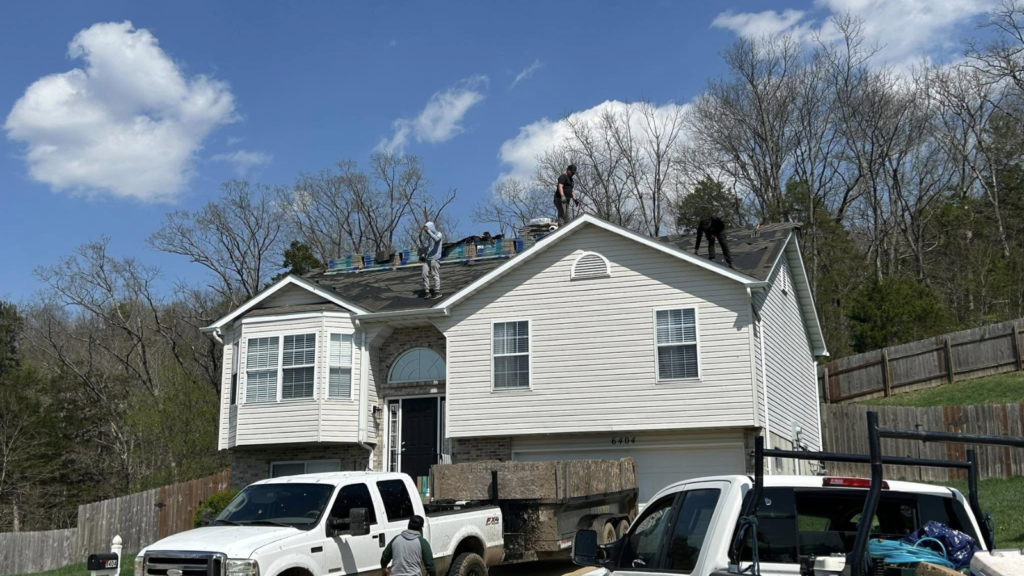
Your roof works every day to protect your home from rain, wind, hail, heat, snow, and changing temperatures. Because it is constantly exposed to the elements, roofing problems can eventually develop even when the system was originally installed correctly.
For homeowners in Columbia, Illinois, understanding common roofing issues can make a major difference. Recognizing warning signs early may allow you to address a minor repair before moisture reaches the roof decking, attic insulation, walls, ceilings, or other parts of your home.
Finding dependable Columbia roof problem solutions starts with understanding what is causing the issue. A missing shingle, for example, may require a relatively straightforward repair. A recurring leak around a chimney may point to deteriorated flashing. Sagging sections of a roof could indicate moisture damage or structural concerns that require immediate professional evaluation.
At Diamond Roofing & Exteriors, we help homeowners throughout Columbia, Waterloo, Alton, Bethalto, Godfrey, Chesterfield, Crystal City, Farmington, Festus, Herculaneum, Hillsboro, Mehlville, Oakville, Pevely, St. Charles, and St. Peters identify and address roofing problems before they become more expensive.
Why Roof Problems Develop
A roofing system is made up of several components that work together.
These may include:
- Shingles or metal roofing
- Roof decking
- Underlayment
- Flashing
- Ice and water barriers
- Vents
- Ridge caps
- Soffit
- Fascia
- Gutters
- Fasteners
- Sealants
Problems can occur when one or more of these components become damaged, worn, improperly installed, or exposed to severe weather.
Common causes include:
- Storm damage
- Normal aging
- Improper installation
- Poor maintenance
- Moisture
- Falling debris
- Temperature changes
- Clogged gutters
- Inadequate ventilation
One of the keys to effective Columbia roof problem solutions is identifying the underlying cause rather than simply covering the visible symptom.
1. Roof Leaks
Roof leaks are among the most common concerns homeowners experience.
A leak may begin as a small water stain on the ceiling, but the source may be several feet away from the visible damage.
Water can enter through:
- Missing shingles
- Damaged flashing
- Cracked pipe boots
- Roof valleys
- Chimneys
- Skylights
- Improperly sealed penetrations
Once water gets beneath the roofing materials, it may travel along decking, rafters, or insulation before appearing inside.
How Roof Leaks Are Fixed
The correct repair depends on the source.
A contractor may need to:
- Replace damaged shingles
- Repair or replace flashing
- Install a new pipe boot
- Repair underlayment
- Replace damaged decking
- Correct valley installation
Simply applying sealant to the visible area is rarely a reliable long-term solution.
Professional Columbia roof problem solutions should begin with a careful inspection to locate where water is actually entering.
2. Missing Shingles
Strong winds and severe storms can loosen or completely remove shingles.
Missing shingles expose the layers beneath the roof covering to rain, sunlight, and additional weather damage.
Even one missing shingle deserves attention.
How Missing Shingles Are Repaired
If the surrounding roofing remains in good condition, individual shingles may often be replaced.
The contractor should also inspect:
- Nearby shingles
- Underlayment
- Fasteners
- Roof decking
- Adhesive seals
If multiple shingles are missing across the roof, broader storm damage may be present.
3. Cracked or Broken Shingles
Shingles can crack due to:
- Aging
- Wind
- Hail
- Temperature changes
- Impact from branches
Cracks can allow moisture beneath the roofing surface.
Small cracks may initially appear harmless, but repeated exposure to rain and freezing temperatures can make them worse.
How Cracked Shingles Are Fixed
Damaged shingles are usually removed and replaced.
If cracking is widespread, the roof may be nearing the end of its useful life.
In that situation, replacement may provide better long-term value than repeatedly repairing individual sections.
Choosing appropriate Columbia roof problem solutions means considering the overall condition of the roof rather than treating every damaged shingle as an isolated issue.
4. Curling Shingles
Shingles that curl upward or develop raised edges may indicate aging, heat exposure, ventilation problems, or installation issues.
Curling reduces the ability of shingles to shed water properly.
Wind can also catch the raised edges and cause additional damage.
How Curling Shingles Are Addressed
A few damaged shingles may sometimes be replaced.
However, widespread curling often indicates that the roofing material has deteriorated.
A professional inspection can determine whether repairs are practical or whether replacement should be considered.
5. Excessive Granule Loss
Asphalt shingles have surface granules that help protect them from sunlight and weather.
Some granule loss is normal, especially after a new roof is installed.
However, large quantities of granules in gutters or downspouts may indicate aging or storm damage.
You may also notice darker areas on the shingles where granules are missing.
How Granule Loss Is Addressed
Individual shingles with significant damage may be replaced.
Widespread granule loss may indicate that the roof is nearing replacement age.
A professional roofer can evaluate whether the problem is caused by normal aging, hail, foot traffic, or another condition.
6. Hail Damage
Hailstorms can damage roofs even when there are no immediate leaks.
Hail may cause:
- Shingle bruising
- Granule loss
- Cracks
- Dents in metal
- Damaged vents
- Damaged flashing
- Gutter dents
The severity depends on hail size, wind speed, roofing material, and roof age.
How Hail Damage Is Fixed
Minor isolated damage may be repairable.
Widespread hail damage may require larger repairs or replacement.
An experienced roofing contractor can inspect the roof and document affected areas.
Storm inspections are one of the important Columbia roof problem solutions available to homeowners after severe weather.
7. Wind Damage
Strong winds can affect roofing without completely removing shingles.
Wind may:
- Lift shingle edges
- Break adhesive seals
- Loosen fasteners
- Tear ridge caps
- Damage flashing
- Pull gutters loose
Lifted shingles sometimes settle back into place, making the damage difficult to identify from the ground.
However, once the seal has been compromised, those shingles may be more vulnerable during the next storm.
How Wind Damage Is Repaired
Damaged or loosened materials can often be replaced when the problem is limited.
More extensive wind damage may require larger repairs.
A post-storm inspection is recommended if your neighborhood experienced strong winds.
8. Flashing Problems
Flashing is installed around areas where the roof meets walls, chimneys, valleys, vents, skylights, and other penetrations.
These are naturally vulnerable locations.
Flashing may fail because of:
- Corrosion
- Improper installation
- Loose fasteners
- Aging sealant
- Storm damage
- Previous repairs
How Flashing Is Fixed
Damaged flashing may need to be removed and replaced.
Proper installation uses overlapping materials that guide water away from vulnerable intersections.
Sealant alone should not be relied upon when the underlying flashing system is damaged.
Proper flashing repair is among the most important Columbia roof problem solutions because leaks around transitions can cause hidden damage inside walls and roof decking.
9. Damaged Roof Valleys
Roof valleys form where two slopes meet.
A significant amount of rainwater flows through these areas, making them particularly important for drainage.
Valley problems may result from:
- Worn shingles
- Improper installation
- Accumulated debris
- Damaged flashing
- Storm impact
How Valley Problems Are Fixed
Depending on the roofing design, repair may involve replacing shingles, installing new valley flashing, repairing underlayment, or correcting the valley system.
Because valleys carry substantial water during heavy rain, repairs should be completed carefully.
10. Clogged Gutters
Gutters are not technically part of the roof covering, but they are essential to roof drainage.
Leaves, branches, roofing granules, and other debris can block water flow.
When gutters become clogged, water may overflow onto:
- Fascia
- Soffit
- Siding
- Foundations
- Landscaping
Water may also collect near roof edges.
How Gutter Problems Are Fixed
Gutters should be cleaned regularly and after major storms.
Damaged or poorly sloped sections may require repair or replacement.
Downspouts should direct water safely away from the foundation.
Maintaining gutters is one of the simplest Columbia roof problem solutions homeowners can use to reduce moisture problems.
11. Damaged Fascia
Fascia runs along the roof edge and often supports gutters.
It may become damaged by:
- Overflowing gutters
- Roof leaks
- Rot
- Pests
- Storms
Signs include peeling paint, discoloration, soft wood, or gutters pulling away from the home.
How Fascia Damage Is Fixed
Damaged sections may need to be removed and replaced.
The source of moisture should also be corrected.
Replacing fascia without addressing overflowing gutters or roof-edge leaks may allow the problem to return.
12. Soffit Damage
Soffits are located beneath roof overhangs.
They help protect the underside of the roof and may also provide attic ventilation.
Damage may include:
- Rot
- Holes
- Pest activity
- Loose panels
- Water stains
How Soffit Problems Are Fixed
Damaged soffit panels may be replaced.
Contractors should also determine whether the problem came from a roof leak, gutter overflow, or another moisture source.
Ventilated soffits should remain unobstructed so air can enter the attic.
13. Poor Roof Ventilation
Ventilation plays an important role in controlling attic heat and moisture.
An effective system typically allows fresh air to enter near the roof edges while warm, moist air exits near the ridge.
Poor ventilation may contribute to:
- Excessive attic heat
- Moisture buildup
- Mold
- Damaged insulation
- Premature shingle aging
- Ice dam formation
How Ventilation Problems Are Fixed
A roofing contractor may evaluate:
- Intake vents
- Ridge vents
- Attic insulation
- Blocked soffit vents
- Existing exhaust vents
Adding more vents is not always the answer. The system should be balanced.
Professional Columbia roof problem solutions should consider ventilation whenever premature roof aging or attic moisture is present.
14. Sagging Roof Areas
A sagging roof should never be ignored.
Possible causes include:
- Damaged decking
- Structural deterioration
- Long-term moisture
- Excessive weight
- Framing concerns
Sagging can sometimes be visible from outside as a dip or uneven roofline.
How Sagging Is Fixed
The roof should be professionally evaluated to determine which structural components are affected.
Repairs may include replacing damaged decking or addressing framing issues.
Because sagging may indicate structural problems, homeowners should avoid walking on the affected area.
15. Damaged Roof Decking
Roof decking provides the surface beneath shingles or other roofing materials.
Water intrusion can cause decking to:
- Swell
- Rot
- Delaminate
- Become soft
- Lose fastener strength
Decking damage is often discovered during roof replacement when old roofing materials are removed.
How Damaged Decking Is Fixed
Weak or deteriorated sections should be replaced before new roofing materials are installed.
Installing shingles over damaged decking can lead to poor fastening and future roof problems.
16. Roof Punctures
Branches, hail, tools, or other impact may puncture roofing materials.
Even small punctures can allow water into the roof system.
How Punctures Are Repaired
Proper repair often requires removing the affected roofing material and checking the layers beneath it.
Simply filling the opening with caulk may not provide adequate long-term protection.
Repairing punctures promptly is one of the Columbia roof problem solutions that can prevent a small issue from becoming extensive moisture damage.
17. Tree and Debris Damage
Trees provide valuable shade, but branches can create roofing problems.
Overhanging limbs may:
- Scrape shingles
- Drop leaves into valleys
- Block gutters
- Break during storms
Branches constantly rubbing against shingles may gradually remove protective granules.
How Tree-Related Problems Are Prevented
Trim branches that extend directly over the roof when it is safe and appropriate to do so.
Large tree work should be handled by qualified professionals.
After a branch strikes the roof, schedule an inspection even if no major damage is visible from the ground.
18. Moss and Algae Growth
Dark streaks or green growth can affect the appearance of a roof.
Algae commonly creates dark staining, while moss can hold moisture against roofing materials.
Aggressive pressure washing should generally be avoided because it can damage asphalt shingles.
How Moss and Algae Are Addressed
Professional or manufacturer-approved cleaning methods should be used.
The underlying causes, such as shade and persistent moisture, should also be considered.
Avoid scraping shingles aggressively or using harsh methods that may remove granules.
19. Ice Dams
Winter weather can create ice dams along roof edges.
They form when heat escaping from the home melts snow on upper sections of the roof. The water flows downward and refreezes near colder roof edges.
As ice builds up, additional meltwater may become trapped and move beneath shingles.
How Ice Dam Problems Are Addressed
Long-term prevention may involve:
- Improving attic insulation
- Sealing air leaks
- Correcting ventilation
- Installing appropriate ice barriers during roof replacement
Trying to break ice from the roof with tools can damage shingles and create safety risks.
20. Chimney Leaks
Chimneys are common leak locations because several roofing components meet around them.
Leaks may result from:
- Damaged step flashing
- Failed counter flashing
- Cracked masonry
- Deteriorated sealant
- Missing cricket flashing
How Chimney Leaks Are Fixed
The contractor must determine whether water is entering through the roofing system or the chimney itself.
Roof flashing repairs may solve one problem, while masonry repairs may be necessary for another.
Careful diagnosis is essential.
21. Pipe Boot Failure
Plumbing vents extend through the roof and are usually sealed with specialized flashing boots.
Rubber components can crack after years of exposure to heat, sunlight, and temperature changes.
A deteriorated pipe boot may allow water into the attic.
How Pipe Boot Problems Are Fixed
The damaged flashing or boot is typically replaced.
The surrounding shingles and decking should also be inspected for moisture damage.
Pipe boot replacement is a relatively small repair when caught early and is another example of practical Columbia roof problem solutions.
22. Improper Roof Installation
Unfortunately, some roofing problems begin on the day the roof is installed.
Installation mistakes may include:
- Incorrect nail placement
- Poor shingle alignment
- Missing flashing
- Insufficient underlayment
- Incorrect ventilation
- Improper valley construction
- Inadequate sealing
These mistakes may shorten the lifespan of otherwise high-quality materials.
How Installation Problems Are Fixed
The solution depends on the extent of the problem.
Minor sections may be repaired, while widespread installation defects may make replacement more practical.
A professional roof inspection can help determine the appropriate approach.
23. An Aging Roofing System
Every roofing material has a finite lifespan.
As materials age, homeowners may notice:
- Curling shingles
- Cracking
- Granule loss
- Frequent leaks
- Fading
- Brittle materials
- Repeated repair needs
Eventually, ongoing repairs may become less economical than replacement.
How to Address an Aging Roof
A professional contractor can evaluate the condition and provide repair and replacement options.
The age of the roof should be considered alongside its actual condition rather than used as the only deciding factor.
When Should You Repair vs. Replace a Roof?
One of the most common questions homeowners ask is whether they need a repair or complete replacement.
Repair may make sense when:
- Damage is isolated
- The roof is relatively young
- Decking remains sound
- Matching materials are available
- The rest of the roofing system is performing well
Replacement may make more sense when:
- Damage affects multiple areas
- The roof is near the end of its lifespan
- Repairs are becoming frequent
- Widespread deterioration is present
- Significant decking damage exists
- Installation problems affect large areas
The best Columbia roof problem solutions are based on the condition of the entire roof, not simply its age or one visible issue.
Why Professional Roof Inspections Matter
Many roof problems remain hidden until they become serious.
Professional contractors know where to look for early warning signs.
A roof inspection may include:
- Shingles
- Flashing
- Roof valleys
- Chimneys
- Skylights
- Vents
- Gutters
- Soffit
- Fascia
- Roof edges
- Attic moisture
- Decking condition
Regular inspections can help identify problems before they require extensive repairs.
Inspections are especially useful after:
- Hailstorms
- Strong winds
- Heavy rain
- Falling branches
- Winter weather
What Homeowners Can Safely Check
You do not need to climb onto your roof to monitor its condition.
From the ground, homeowners can look for:
- Missing shingles
- Loose gutters
- Sagging areas
- Branches on the roof
- Visible flashing damage
- Debris buildup
Inside the attic, check for:
- Water stains
- Damp insulation
- Musty odors
- Mold
- Visible daylight
Inside living areas, watch for:
- Ceiling stains
- Bubbling paint
- Damp walls
- Peeling finishes
Contact a roofing professional if you notice any concerning changes.
Why Prompt Roof Repairs Matter
Roof problems rarely improve on their own.
A minor opening may allow repeated moisture intrusion. Over time, that water can affect:
- Decking
- Insulation
- Drywall
- Ceilings
- Framing
Early repairs are typically simpler than repairing damage that has spread through several layers of the home.
Prompt professional Columbia roof problem solutions can help preserve your existing roofing system and reduce the risk of larger expenses.
Preventing Common Roofing Problems
Not every roof problem can be prevented, particularly storm damage, but regular maintenance can reduce many risks.
Homeowners should:
- Keep gutters clean
- Trim overhanging branches
- Schedule periodic inspections
- Check the roof after severe storms
- Maintain attic ventilation
- Watch for interior moisture
- Repair small problems promptly
- Keep debris away from roof valleys
These simple steps can contribute significantly to roof longevity.
Why Local Roofing Experience Matters
Roofing problems vary depending on local weather and building conditions.
Homes throughout Columbia and surrounding Missouri and Illinois communities face storms, hail, strong winds, heavy rainfall, heat, freezing temperatures, and seasonal changes.
A local contractor understands these regional conditions and the roofing materials commonly used throughout the area.
Local experience can help contractors recognize common problems quickly and recommend practical Columbia roof problem solutions based on the actual condition of the property.
Why Choose Diamond Roofing & Exteriors?
At Diamond Roofing & Exteriors, we understand that roof problems can be stressful. Homeowners want clear answers and dependable solutions rather than unnecessary confusion.
We proudly serve homeowners throughout:
- Columbia
- Waterloo
- Alton
- Bethalto
- Godfrey
- Chesterfield
- Crystal City
- Farmington
- Festus
- Herculaneum
- Hillsboro
- Mehlville
- Oakville
- Pevely
- St. Charles
- St. Peters
Our services include professional roofing inspections, roof repairs, roof replacement, storm damage restoration, metal roofing, siding, gutters, and exterior solutions.
We focus on quality workmanship, reliable materials, professional communication, and practical recommendations based on the needs of each home.
Whether you have noticed a small ceiling stain, missing shingles after a storm, damaged flashing, or widespread roof deterioration, our team can inspect the system and help determine the appropriate solution.
Final Thoughts
Roof problems can range from a single damaged shingle to widespread structural deterioration. The key is identifying issues early and addressing the actual source rather than simply covering the visible symptoms.
Common concerns such as leaks, missing shingles, flashing failures, hail damage, wind damage, clogged gutters, ventilation problems, damaged decking, and aging roofing materials all require different approaches.
The right Columbia roof problem solutions depend on the cause, extent of damage, roof age, materials, and overall condition of the system.
Routine maintenance and professional inspections can help homeowners catch problems early. After severe storms, checking the home from the ground and scheduling an inspection when necessary can also help prevent hidden damage from becoming more serious.
Professional Columbia roof problem solutions are particularly important when water intrusion, structural concerns, or widespread storm damage are involved. These problems can affect much more than the visible roofing material if left untreated.
If you are concerned about your roof in Columbia or one of the surrounding communities, contact Diamond Roofing & Exteriors. Our team can inspect your roofing system, explain what we find, and recommend dependable Columbia roof problem solutions designed to help protect your home for the long term.
