
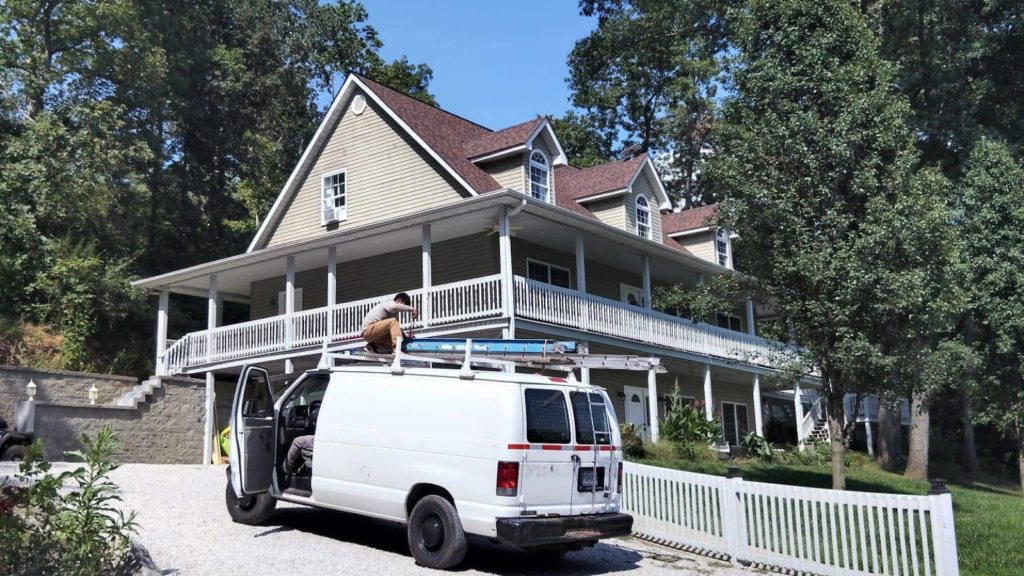
Your roof is one of your home’s most important protective systems. Day after day, it shields your property from rain, wind, hail, heat, snow, falling debris, and seasonal temperature changes. Even a professionally installed roof, however, will eventually reach a point when repairs are no longer the most practical solution.
The challenge for homeowners is knowing when that point has arrived.
A missing shingle does not necessarily mean you need an entirely new roof. At the same time, repeatedly repairing an aging or extensively damaged roofing system can become expensive while leaving other underlying problems unresolved. Recognizing common roof replacement indicators can help you determine when it is time to have the entire roofing system professionally evaluated.
For homeowners in Columbia, Waterloo, Alton, Bethalto, Godfrey, Chesterfield, Crystal City, Farmington, Festus, Herculaneum, Hillsboro, Mehlville, Oakville, Pevely, St. Charles, and St. Peters, weather can add another consideration. Strong thunderstorms, hail, wind, heavy rain, summer heat, freezing temperatures, and winter weather can all contribute to roofing wear.
At Diamond Roofing & Exteriors, we help homeowners understand the condition of their roofs and determine whether repair or replacement makes the most sense. Here are 10 important signs that your roof may be approaching the end of its useful life.
Why Knowing When to Replace Your Roof Matters
Waiting until water is pouring through the ceiling is not the best way to determine whether your roof needs replacement.
Roof deterioration often happens gradually.
Aging shingles may lose protective granules. Flashing may begin to fail. Small leaks can affect decking and insulation. Ventilation problems may accelerate material deterioration without producing an obvious exterior warning.
Understanding roof replacement indicators gives homeowners an opportunity to act before widespread interior or structural damage develops.
Timely replacement may help protect:
- Roof decking
- Attic insulation
- Ceilings
- Interior walls
- Structural framing
- Electrical components
- Siding and exterior finishes
- Personal belongings
It can also give you more control over the project. Planning a roof replacement is generally easier than dealing with an emergency during severe weather.
1. Your Roof Is Approaching the End of Its Expected Lifespan
Roof age is one of the first factors to consider when evaluating replacement.
Different roofing materials have different expected service lives. Asphalt shingles, for example, generally have a shorter lifespan than many metal roofing systems. Actual performance depends on several factors, including:
- Material quality
- Installation
- Ventilation
- Maintenance
- Sun exposure
- Storm history
- Roof slope
- Local climate
An older roof does not automatically require replacement simply because it reaches a particular age. However, age combined with visible deterioration can be one of the strongest roof replacement indicators.
If you recently purchased your home and do not know when the roof was installed, look through property records, inspection reports, previous invoices, or seller disclosures when available.
A professional roof inspection can also help estimate the condition of the system.
2. Shingles Are Curling, Cracking, or Buckling
Asphalt shingles should generally remain relatively flat against the roof.
As they age or become damaged, homeowners may notice:
- Curled edges
- Cracked surfaces
- Raised corners
- Buckling
- Brittle areas
- Distorted shingles
These conditions can develop because of normal aging, prolonged heat exposure, moisture, ventilation problems, or installation issues.
A few damaged shingles may be repairable.
However, when curling, cracking, or buckling appears across multiple roof sections, the problem may indicate widespread deterioration.
Damaged shingles become less effective at shedding water and resisting wind. Raised edges may also allow strong gusts to lift the material more easily.
Widespread shingle deterioration is one of the roof replacement indicators that should prompt a professional evaluation.
3. You Are Finding Excessive Granules in the Gutters
Asphalt shingles contain mineral granules that help protect the material beneath them from ultraviolet radiation and weather exposure.
Some granule shedding is normal. New shingles may release loose granules shortly after installation, and older shingles gradually lose granules throughout their service life.
The concern is excessive or uneven loss.
Homeowners may notice granules:
- Inside gutters
- At downspout outlets
- On patios
- Near the foundation
- In concentrated areas on the roof
You may also notice dark or shiny patches where the shingle surface has lost its protective covering.
As granules disappear, the asphalt layer underneath receives greater exposure to sunlight and weather. This can accelerate deterioration.
If widespread granule loss is occurring on an older roof, replacement may become more practical than individual repairs.
4. Your Roof Has Frequent or Recurring Leaks
A single roof leak does not necessarily mean the entire roof needs replacement.
Leaks can sometimes result from isolated issues such as:
- Damaged flashing
- A cracked pipe boot
- Missing shingles
- Skylight problems
- A puncture
- Localized storm damage
These issues may be repairable when the rest of the roof remains in good condition.
Recurring leaks are different.
If you repeatedly repair leaks only to discover new moisture problems elsewhere, the roofing system may be experiencing broader deterioration.
Warning signs inside your home can include:
- Ceiling stains
- Bubbling paint
- Damp drywall
- Musty odors
- Wet attic insulation
- Water trails along rafters
- Mold or mildew
Recurring water intrusion is among the most important roof replacement indicators because moisture can damage much more than shingles.
Once water reaches the roof decking, insulation, framing, or interior finishes, repair costs may increase significantly.
5. Large Areas of Shingles Are Missing
High winds can lift and remove shingles.
If only a few shingles are missing and the surrounding materials remain healthy, repair may be possible.
Widespread missing shingles can indicate a more serious problem.
Older shingles may become brittle or lose their adhesive strength, making them increasingly vulnerable to storms.
After severe weather, look safely from the ground for:
- Bare roof sections
- Shingles in the yard
- Exposed underlayment
- Missing ridge caps
- Uneven roof surfaces
Do not climb onto a damaged roof yourself.
If shingles are missing across several sections, schedule a professional inspection.
The contractor can determine whether individual repairs are practical or whether widespread deterioration makes replacement a better long-term option.
6. The Roofline Is Sagging or Uneven
A healthy roof should generally have a consistent structural profile.
Sagging, dipping, or visibly uneven areas require professional attention.
Possible causes include:
- Damaged roof decking
- Long-term moisture intrusion
- Structural deterioration
- Framing problems
- Excessive loading
- Previous installation issues
Unlike minor cosmetic concerns, sagging may indicate a problem with components beneath the visible roofing material.
This makes structural changes some of the most serious roof replacement indicators homeowners can encounter.
If you notice an unusual dip or sag in the roofline, do not walk on the affected area. Contact a roofing professional for an evaluation.
Depending on the cause, repairs may involve replacing damaged decking or correcting structural components before new roofing materials can be installed.
7. Your Roof Has Widespread Storm Damage
Columbia and surrounding Illinois and Missouri communities can experience thunderstorms, high winds, hail, heavy rainfall, and falling debris.
Storm damage can range from obvious destruction to subtle deterioration.
Possible signs include:
- Missing shingles
- Hail impact marks
- Granule loss
- Cracked shingles
- Lifted shingles
- Dented flashing
- Damaged ridge caps
- Punctures
- Damaged gutters
- Fallen branches
One challenge is that storm damage is not always visible from ground level.
Hail may bruise shingles without creating holes. Wind may break adhesive seals while leaving shingles in approximately their original positions.
A professional inspection after significant weather can help determine how extensively the roof was affected.
If storm damage is limited, repair may be possible. If damage is widespread across multiple slopes, replacement may be considered based on the overall condition of the system.
8. Daylight Is Visible Through the Roof
If you can safely access your attic, look around during daylight hours.
Unexpected light coming through the roof may indicate an opening.
Possible causes include:
- Missing roofing materials
- Damaged decking
- Holes
- Failed flashing
- Deteriorated roof components
Keep in mind that intentional vents may allow light into certain attic areas. The concern is unexpected daylight where there should be a continuous roof assembly.
If light can enter through an unintended opening, moisture may be able to enter as well.
Visible openings combined with other roof replacement indicators may suggest significant deterioration that deserves immediate evaluation.
9. Repairs Are Becoming More Frequent and Expensive
Roof repair is often a smart choice when the roofing system remains generally healthy.
Eventually, however, repeated repairs can become less economical.
Consider how often you have called for roofing service during the past several years.
Are you repeatedly addressing:
- New leaks?
- Missing shingles?
- Flashing failures?
- Cracked pipe boots?
- Loose materials?
- Storm-related problems?
If each season brings another repair, it may be worth comparing the cumulative cost of continued maintenance with the cost and long-term value of replacement.
A professional contractor can help you understand both options.
Replacing a roof does require a larger upfront investment, but it may provide greater predictability when the existing system has become unreliable.
Frequent repairs are among the practical roof replacement indicators homeowners sometimes overlook because each individual repair may initially seem manageable.
10. The Roof Is Affecting Your Home’s Overall Performance
Roof deterioration can affect more than water protection.
Problems with roofing, insulation, and ventilation may influence attic temperature, moisture levels, and indoor comfort.
Homeowners may notice:
- Excessively hot attic spaces
- Uneven indoor temperatures
- High humidity
- Condensation
- Moisture in insulation
- Ice dam problems during winter
- Unexplained increases in heating or cooling demand
Not every energy or comfort problem is caused by the roof. HVAC performance, windows, insulation, air sealing, and other building components also matter.
However, when an aging roof is accompanied by ventilation problems, moisture, and deteriorating materials, replacement provides an opportunity to evaluate the entire roofing system.
Roof Replacement vs. Roof Repair: How Do You Decide?
Knowing the difference between a repairable problem and a roof that needs replacement can be difficult.
Generally, repair may be appropriate when:
- Damage is isolated
- The roof is relatively young
- The decking remains sound
- Compatible replacement materials are available
- The majority of the roofing system is performing well
Replacement may be worth considering when:
- Damage affects several areas
- The roof is near the end of its useful life
- Leaks occur repeatedly
- Shingles show widespread deterioration
- Decking has extensive damage
- Repairs are becoming frequent
- Storm damage is extensive
No single rule applies to every home.
The best approach is to evaluate all roof replacement indicators together rather than basing the decision on one symptom.
Why Roof Age Alone Does Not Tell the Whole Story
Homeowners frequently ask how many years a roof should last.
While expected lifespan is useful for planning, age is only one factor.
Two roofs installed in the same year may age differently because of:
- Installation quality
- Ventilation
- Tree coverage
- Sun exposure
- Storm history
- Maintenance
- Roof orientation
- Material quality
One roof may remain serviceable while another develops widespread problems earlier.
That is why physical condition matters more than simply checking a calendar.
What Happens During a Professional Roof Inspection?
A professional roof inspection helps determine whether repairs or replacement may be appropriate.
At Diamond Roofing & Exteriors, an evaluation may consider areas such as:
- Shingles
- Roof valleys
- Flashing
- Ridge caps
- Roof penetrations
- Chimneys
- Pipe boots
- Gutters
- Soffit
- Fascia
- Ventilation
- Visible decking conditions
- Interior or attic moisture when appropriate
The goal is to understand how the entire system is performing.
For example, a ceiling stain might appear to indicate a damaged shingle, but the actual source could be flashing several feet away.
Professional evaluation helps identify the cause rather than simply treating the visible symptom.
Why Flashing Condition Matters
Flashing protects vulnerable areas where roof surfaces meet walls, chimneys, valleys, vents, and other penetrations.
As flashing ages, it may:
- Corrode
- Separate
- Bend
- Develop gaps
- Lose sealant
- Become damaged by storms
One flashing problem may be repairable.
However, widespread flashing deterioration on an older roof can add to other roof replacement indicators and suggest that the system requires broader attention.
During replacement, flashing should be carefully evaluated and installed to direct water away from vulnerable areas.
What Roof Decking Can Tell You
Roof decking forms the structural surface beneath the roofing material.
Leaks can cause decking to become:
- Soft
- Swollen
- Rotted
- Delaminated
- Moldy
Decking damage is sometimes discovered only after old roofing materials are removed.
If large sections are compromised, they may need replacement before the new roofing system can be installed.
Ignoring damaged decking can weaken fastener performance and shorten the life of new roofing materials.
What About Moss or Algae?
Dark streaks, moss, or algae do not automatically mean your roof needs replacement.
Algae may primarily affect appearance, while moss can hold moisture against roofing materials.
The condition becomes more concerning when growth accompanies:
- Curling shingles
- Granule loss
- Soft decking
- Repeated moisture
- Advanced roof age
Avoid aggressive pressure washing because it may damage asphalt shingles.
Professional or manufacturer-approved cleaning methods are generally safer.
How Gutters Can Provide Clues About Roof Condition
Gutters often reveal information about roofing health.
Check them for:
- Large quantities of shingle granules
- Pieces of roofing material
- Dents from hail
- Loose fasteners
- Sagging sections
After severe weather, gutter damage can indicate that other parts of the exterior were exposed to similar conditions.
Gutters should also remain clear so water can drain efficiently away from the roof.
How Attic Conditions Can Reveal Roof Problems
Your attic is one of the best places to identify problems that cannot be seen from the driveway.
Watch for:
- Damp insulation
- Dark wood stains
- Mold
- Rusted fasteners
- Musty odors
- Water trails
- Unexpected daylight
- Condensation
These signs do not always mean complete replacement is necessary, but they indicate that the source should be investigated.
When attic moisture appears alongside several exterior roof replacement indicators, the roofing system may require significant attention.
Why Waiting Too Long Can Become Expensive
Roofing problems rarely remain isolated indefinitely.
A small leak can eventually affect multiple layers of the home.
Water may move from:
- Shingles
- Underlayment
- Roof decking
- Insulation
- Structural framing
- Drywall
- Interior finishes
By the time homeowners notice a ceiling stain, moisture may already have traveled through several materials.
Addressing problems earlier can help limit secondary damage.
Planning Replacement Before an Emergency
There is an important advantage to identifying an aging roof before it fails.
You have time to make informed decisions.
Instead of urgently searching for help during a leak, you can compare:
- Roofing materials
- Warranty options
- Colors
- Contractors
- Project schedules
- Budget considerations
Planning also allows homeowners to coordinate roofing with other exterior improvements such as gutters or siding when appropriate.
Recognizing roof replacement indicators early gives you more control over the process.
Choosing the Right Roofing Material
If replacement becomes necessary, homeowners have several roofing material options.
Asphalt Shingles
Asphalt shingles remain popular because they offer:
- Versatile appearance
- Multiple color options
- Competitive cost
- Straightforward repair
- Compatibility with many home styles
Metal Roofing
Metal roofing may appeal to homeowners looking for durability and a distinctive appearance.
Potential advantages include:
- Long service life
- Strong weather resistance
- Low maintenance requirements
- Fire resistance
- Energy-efficient options
The right choice depends on the home’s architecture, budget, maintenance preferences, and long-term plans.
Diamond Roofing & Exteriors can help homeowners compare options based on their specific property.
What to Expect During Roof Replacement
Understanding the process can make replacement less stressful.
A typical project may involve:
Preparing the Property
Crews prepare work areas and protect landscaping and exterior features.
Removing Existing Materials
Old roofing materials are removed so the underlying structure can be evaluated.
Inspecting Roof Decking
Damaged decking is identified and replaced when necessary.
Installing Protective Layers
Underlayment, flashing, drip edge, and other components are installed according to the roofing system.
Installing New Roofing
New shingles or metal roofing are installed according to manufacturer requirements.
Completing Flashing and Ventilation
Roof penetrations, valleys, ridges, and ventilation components receive careful attention.
Cleanup and Final Inspection
Debris is removed and the completed roofing system is reviewed.
The exact timeline depends on roof size, complexity, materials, repairs, and weather.
How to Prepare Your Home for Replacement
Homeowners can make the installation process easier by preparing beforehand.
Consider:
- Moving vehicles away from the home
- Removing fragile wall decorations
- Covering belongings stored in the attic
- Moving patio furniture
- Securing pets indoors
- Keeping children away from work areas
- Providing contractors with clear driveway access
Roof replacement can create noise and vibration, so planning ahead can make the project more comfortable.
How to Protect Your New Roof
Once your replacement is complete, routine maintenance can help protect your investment.
Helpful habits include:
- Schedule periodic inspections
- Check the roof after major storms
- Keep gutters clean
- Trim overhanging branches
- Maintain attic ventilation
- Watch for interior moisture
- Address minor repairs promptly
- Avoid unnecessary roof traffic
Even a new roofing system benefits from regular attention.
Why Local Roofing Experience Matters in Columbia
Homes throughout Columbia and surrounding communities experience weather that can challenge roofing materials.
Local conditions may include:
- Severe thunderstorms
- Hail
- High winds
- Heavy rainfall
- Summer heat
- Freezing temperatures
- Snow and ice
- Rapid seasonal changes
A contractor familiar with the region understands how these conditions affect local roofing systems.
Local experience is also valuable when evaluating roof replacement indicators because contractors regularly see the types of deterioration and storm damage common throughout the area.
Questions to Ask Before Replacing Your Roof
Before choosing a contractor, ask questions such as:
- What condition is my existing roof in?
- Is repair still practical?
- What roofing materials do you recommend?
- Will the roof decking be inspected?
- How will flashing be handled?
- Is ventilation included in the evaluation?
- What warranties are available?
- How long should the project take?
- How will cleanup be handled?
- What happens if hidden damage is discovered?
A professional contractor should be willing to explain the process clearly.
Why Choose Diamond Roofing & Exteriors?
At Diamond Roofing & Exteriors, we understand that replacing a roof is a major decision.
Our goal is to help homeowners understand what is happening with their roofing system and choose a practical solution based on its actual condition.
We proudly serve homeowners throughout Columbia, Waterloo, Alton, Bethalto, Godfrey, Chesterfield, Crystal City, Farmington, Festus, Herculaneum, Hillsboro, Mehlville, Oakville, Pevely, St. Charles, and St. Peters.
Our services include:
- Roof inspections
- Roof repair
- Roof replacement
- Storm damage restoration
- Residential roofing
- Metal roofing
- Vinyl siding
- Gutters
We focus on quality workmanship, dependable materials, clear communication, and homeowner-focused service.
Whether you have noticed a small leak or several roof replacement indicators, our team can evaluate your roofing system and explain the options available for your home.
Final Thoughts
Knowing when to replace your roof is not always straightforward.
One missing shingle may need only a repair. A small flashing issue may also be relatively simple to correct. But when multiple problems begin appearing together, replacement may become the more practical long-term solution.
The most important roof replacement indicators include advanced roof age, widespread curling or cracking shingles, excessive granule loss, recurring leaks, missing shingles, structural sagging, extensive storm damage, unexpected daylight in the attic, frequent repair needs, and broader performance problems.
Pay attention to these warning signs rather than waiting for a major leak.
Regular professional inspections can help you understand whether your roof remains serviceable and identify problems before they affect other areas of the home.
For homeowners in Columbia and surrounding communities, severe weather makes proactive roof care especially important. Hail, wind, rain, heat, snow, and freezing temperatures can gradually affect roofing materials even when damage is not immediately visible.
Recognizing roof replacement indicators early gives you time to evaluate your options and plan your project rather than making rushed decisions during an emergency.
If you are seeing signs of roof deterioration or are unsure whether repair or replacement is appropriate, contact Diamond Roofing & Exteriors. Our team can inspect your roofing system, explain what we find, and help you determine the right approach for protecting your home.
