
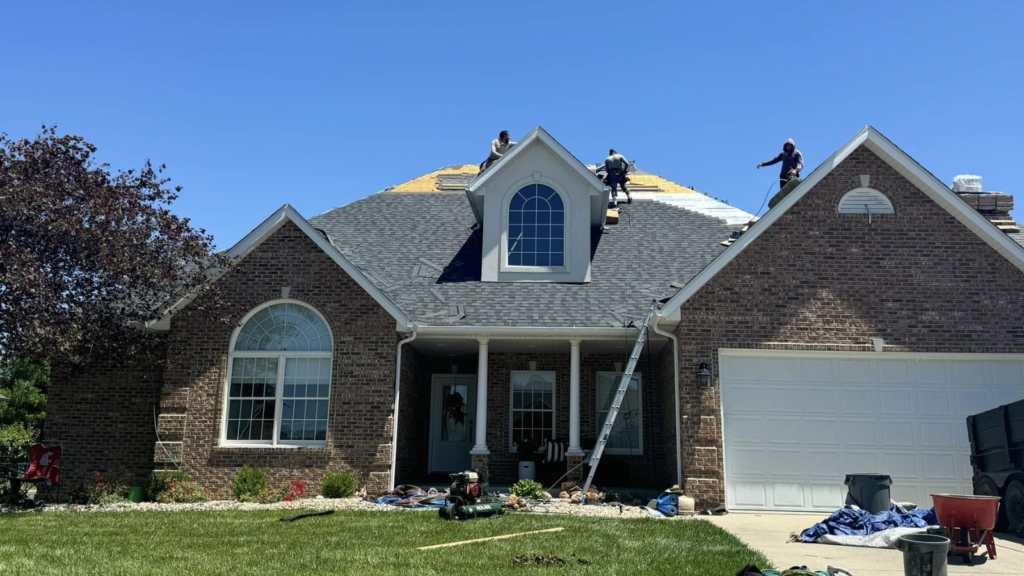
Severe weather can affect a home in a matter of minutes. Strong winds can lift shingles, hail can damage roofing materials, heavy rain can expose vulnerable flashing, and falling branches can damage gutters, siding, or roof decking. After the storm passes, homeowners are often left wondering what happened, how serious the damage is, and who they should call.
Choosing the right contractor is one of the most important decisions you can make during the restoration process.
Working with a local storm damage contractor gives homeowners access to a roofing professional who understands regional weather, common roofing systems, local construction practices, and the communities they serve. Local contractors are also easier to contact before, during, and after the restoration process.
At Diamond Roofing & Exteriors, we serve homeowners throughout Columbia, Waterloo, Alton, Bethalto, Godfrey, Chesterfield, Crystal City, Farmington, Festus, Herculaneum, Hillsboro, Mehlville, Oakville, Pevely, St. Charles, and St. Peters.
Storm Damage Is Not Always Obvious
Some storm damage is impossible to miss.
You may find shingles scattered around the yard, see a branch lying across the roof, or notice water dripping from the ceiling.
Other problems are much more subtle.
Storm related roofing concerns may include:
- Lifted shingles
- Broken shingle seals
- Wind creases
- Hail impacts
- Damaged flashing
- Loose ridge caps
- Dented gutters
- Damaged pipe boots
- Small punctures
- Siding damage
These problems may not immediately cause visible interior leaks.
A professional inspection can help identify areas that deserve attention before additional weather creates more problems.
Why Local Experience Matters After a Storm
Roofing systems are influenced by the environment around them.
A contractor who regularly works throughout Columbia and surrounding communities understands the types of conditions local homes experience.
This may include thunderstorms, strong winds, hail, heavy rainfall, winter weather, and changing temperatures.
A local storm damage contractor can apply that regional experience when evaluating how a particular weather event may have affected your property.
Local knowledge does not replace a thorough inspection, but it provides useful context when determining what areas should receive close attention.
Local Contractors Understand Regional Roofing Systems
Homes throughout Columbia and surrounding Illinois communities use different roofing materials, designs, slopes, flashing configurations, and ventilation systems.
A local roofing company regularly works with these systems.
That familiarity can help when evaluating:
- Asphalt shingles
- Metal roofing
- Roof valleys
- Chimneys
- Skylights
- Ridge systems
- Gutters
- Siding
- Fascia and soffit
Understanding how local homes are constructed can make the inspection and repair process more efficient.
Faster Response Can Matter
After a significant storm, roofing problems may leave portions of a home vulnerable to additional rain.
Timely evaluation becomes important when there are:
- Missing shingles
- Active leaks
- Punctures
- Fallen branches
- Loose exterior materials
A local company is already operating in the region and may be better positioned to organize inspections and repairs within its established service area.
Storm events can create high demand, so exact response times vary. However, working with a nearby contractor provides a clear local point of contact.
Local Contractors Have a Reputation to Maintain
One of the strongest reasons to hire locally is accountability.
A contractor serving the same communities year after year depends on relationships and reputation.
Homeowners can research:
- Local reviews
- Previous projects
- Business history
- Service areas
- Contact information
- Professional credentials
If questions arise after the work is completed, you know where to find the company.
That ongoing presence is an important advantage of choosing a local storm damage contractor.
Be Cautious of Storm Chasers
After major storms, homeowners may receive unexpected visits from contractors who have temporarily entered the area because of widespread damage.
Not every out of area contractor is unreliable, but homeowners should carefully evaluate anyone asking them to sign an agreement immediately.
Before choosing a contractor, ask:
- Where is the company based?
- How long has it served the area?
- Can you verify its business information?
- Does it have local references?
- Who will handle questions after the project?
- What warranties are provided?
- Will the company still be accessible later?
Avoid making a major roofing decision based solely on urgency or pressure.
A Roof Inspection Should Come Before Major Decisions
Storm damage restoration should begin with understanding the actual condition of the property.
A professional roof inspection may evaluate:
- Shingles
- Flashing
- Roof valleys
- Ridge caps
- Roof vents
- Pipe boots
- Chimneys
- Gutters
- Fascia
- Soffit
- Visible storm impacts
The contractor may also check accessible attic areas when appropriate.
The objective should be identifying what is damaged and determining what type of work is actually needed.
Wind Damage Can Be Difficult to See
Wind does not need to remove a shingle completely to damage it.
Strong winds may lift shingles and break their adhesive seals.
The shingle can then settle back into approximately its original position after the storm.
From the ground, the roof may appear normal.
Closer inspection may reveal:
- Creases
- Lifted edges
- Broken seals
- Loose materials
- Damaged fasteners
A local storm damage contractor familiar with regional storms can inspect these less obvious areas rather than looking only for missing shingles.
Hail Damage Requires Close Evaluation
Hail can affect roofing materials differently depending on the storm and roof condition.
Potential signs may include:
- Localized granule loss
- Surface impacts
- Cracks
- Damage to vents
- Dented gutters
- Damaged downspouts
Hail marks are not always easily visible from ground level.
A professional roofer can evaluate the roof closely and document observed conditions.
Not every hailstorm results in roof replacement. The appropriate response depends on the type and extent of damage.
Heavy Rain Can Reveal Existing Weaknesses
Sometimes a storm does not create an entirely new roofing problem. Instead, heavy rain reveals an existing weakness.
For example, water may enter through:
- Aging flashing
- Damaged pipe boots
- Loose shingles
- Deteriorated sealants
- Roof valleys
- Previous repair areas
A roofing contractor should determine whether the problem is new storm damage, existing deterioration, or a combination of both.
This distinction can affect the recommended repair approach.
Falling Debris Can Damage More Than Shingles
Branches and other storm debris can strike several exterior components.
Damage may affect:
- Shingles
- Roof decking
- Gutters
- Siding
- Fascia
- Soffit
- Roof vents
A large branch can also create structural concerns that require additional professional evaluation.
Homeowners should avoid walking beneath unstable trees or climbing onto a roof after debris impact.
Storm Damage May Affect the Entire Exterior
A storm does not recognize the boundaries between roofing, siding, and gutters.
If hail or strong winds affect one exterior component, other areas may deserve inspection as well.
A complete exterior evaluation may include:
- Roofing
- Siding
- Gutters
- Downspouts
- Fascia
- Soffit
- Exterior trim
At Diamond Roofing & Exteriors, we understand that these components work together to protect the home from weather and manage water.
Gutters Can Provide Important Storm Clues
Gutters and downspouts can sometimes show visible evidence of severe weather.
Look for:
- Dents
- Loose sections
- Separation
- Sagging
- Impact marks
- Damaged downspouts
Gutter damage does not automatically confirm that the roof has significant damage.
However, it can be another reason to have the roofing system professionally inspected.
Siding Should Be Checked After Severe Weather
Hail, wind, and flying debris can also affect siding.
Depending on the material, homeowners may notice:
- Cracks
- Dents
- Loose panels
- Missing sections
- Impact marks
- Open seams
Damaged siding may allow moisture behind the exterior surface.
A contractor offering roofing and exterior services can evaluate how the different components were affected by the same storm.
Local Knowledge Helps With Building Requirements
Roofing and exterior projects may need to comply with applicable building requirements.
A local contractor regularly working in the region is more likely to be familiar with the processes and requirements relevant to the communities it serves.
This local familiarity can be particularly useful when storm damage requires significant roof replacement or exterior restoration.
Homeowners should still ask the contractor how permits, inspections, and applicable requirements will be handled for their specific project.
Local Supplier Relationships Can Help
Established roofing contractors often maintain relationships with regional suppliers.
These relationships can support access to commonly used roofing and exterior materials.
Material availability can become particularly important after widespread storms when many homeowners need repairs at the same time.
A local storm damage contractor with established regional operations already understands the local supply environment and the materials commonly installed on area homes.
Proper Material Matching Matters
When only part of a roof, siding system, or gutter system requires repair, matching existing materials can be challenging.
Differences may occur in:
- Color
- Profile
- Texture
- Manufacturer
- Product availability
- Material age
An experienced contractor can evaluate available options and explain what can realistically be matched.
Homeowners should understand that even the same product may appear different from older materials because of weathering and age.
Documentation Is Important
After a storm, documenting visible damage can be helpful.
Homeowners can safely photograph:
- Fallen branches
- Missing shingles visible from the ground
- Damaged gutters
- Siding damage
- Interior water stains
- Debris around the property
A roofing contractor can document rooftop conditions during an inspection.
Clear documentation provides a record of what was observed and can help homeowners understand the recommended repairs.
How a Contractor Can Assist With Insurance Documentation
If you plan to contact your homeowners insurance provider, your roofing contractor may provide photographs, measurements, inspection findings, or estimates related to the roofing work.
However, the insurance company determines whether damage is covered under your policy.
A reputable local storm damage contractor should not guarantee that your insurance company will approve a claim or promise a specific settlement.
Homeowners should review their policy and communicate directly with their insurer regarding coverage.
Avoid Contractors Who Guarantee Insurance Approval
Be cautious when someone tells you that a new roof will definitely be paid for by insurance before your insurer has evaluated the claim.
Coverage depends on factors such as:
- Policy terms
- Cause of damage
- Deductible
- Exclusions
- Condition of the property
- Insurer evaluation
A roofing contractor can provide information about the physical condition of the roof.
Insurance decisions belong to the insurance provider.
Local Contractors Are Easier to Contact During the Project
Roof restoration may involve several stages.
Depending on the scope, these can include:
- Inspection
- Estimate
- Material selection
- Scheduling
- Removal
- Installation
- Cleanup
- Final review
Questions may arise throughout this process.
Working with a nearby company gives homeowners an established point of contact that operates within the same region.
Good communication is particularly important when storm damage has already made the situation stressful.
Communication Matters After the Work Is Finished
A roofing relationship should not necessarily end the moment the crew leaves.
You may have questions about:
- Maintenance
- Warranties
- Future inspections
- Gutters
- Ventilation
- Additional exterior work
A locally established contractor remains connected to the communities where it completes projects.
This long term accountability is one of the strongest reasons many homeowners prefer working with local companies.
Repair or Replacement?
Not every storm damaged roof needs replacement.
Repair may be appropriate when:
- Damage is isolated
- Most roofing materials remain in good condition
- Only a few shingles are affected
- One flashing area has been damaged
- Decking remains sound
Replacement may deserve consideration when:
- Damage is widespread
- Multiple areas are affected
- Roofing materials were already significantly deteriorated
- Leaks occur in several locations
- Repairs would not adequately restore the roofing system
A trustworthy local storm damage contractor should explain why a repair or replacement is being recommended.
Do Not Replace a Roof Based on Fear
Severe storms can make homeowners understandably concerned.
However, decisions should be based on inspection findings rather than fear.
A professional contractor should be able to show and explain:
- What is damaged
- Where the damage is located
- How serious it appears
- Whether repairs are possible
- Why replacement may be recommended
Homeowners should feel comfortable asking questions.
Ask for Photos of the Damage
Most homeowners do not want to climb onto their roofs, and they should not need to.
Ask your roofing contractor to document important findings with photographs when practical.
Photos may show:
- Missing shingles
- Wind damage
- Hail impacts
- Flashing problems
- Punctures
- Damaged vents
Visual documentation can make it easier to understand what the contractor found.
Ask About the Scope of Work
Before agreeing to restoration work, understand what is included.
Depending on the project, the scope may address:
- Roofing materials
- Underlayment
- Flashing
- Roof vents
- Decking repairs
- Gutters
- Siding
- Cleanup
The exact scope should reflect the property’s actual needs.
If something is unclear, ask for an explanation before work begins.
Ask About Warranties
Roofing projects may involve manufacturer warranties, workmanship warranties, or both.
Homeowners should ask:
- What warranty applies?
- What does it cover?
- Are there maintenance requirements?
- Who should be contacted if a problem occurs?
Warranty terms vary by product and contractor.
Keep copies of relevant documents with your home maintenance records.
Verify the Contractor Before Signing
Storm restoration can involve a significant investment.
Take time to verify the company you are considering.
Look for:
- Established business information
- Local presence
- Reviews
- Relevant roofing experience
- Written estimates
- Clear communication
Do not allow pressure to replace due diligence.
A reputable local storm damage contractor should be willing to answer reasonable questions about the company and proposed work.
Avoid Large Upfront Commitments Without Understanding the Agreement
Before paying or signing anything, understand:
- The project scope
- Payment schedule
- Materials
- Timeline
- Cancellation terms
- Warranty information
Never sign a document you do not understand.
Ask questions and keep copies of agreements and receipts.
Beware of Extremely Low Estimates
The lowest estimate is not always the best value.
An unusually low price may reflect differences in:
- Materials
- Scope
- Installation practices
- Warranty coverage
- Cleanup
- Included components
Compare what each estimate actually includes rather than looking only at the final number.
Quality roofing depends on both materials and installation.
Why Proper Installation Matters After Storm Damage
Replacing damaged materials is only useful when the new system is installed correctly.
Professional roofing work requires attention to:
- Shingle placement
- Fastener placement
- Underlayment
- Flashing
- Roof penetrations
- Valleys
- Ridge areas
- Ventilation
Poor installation can create future problems even when high quality materials are used.
Storm restoration should restore the function of the roofing system, not simply improve its appearance.
Temporary Repairs May Sometimes Be Necessary
If a storm creates an active opening or leak, temporary measures may sometimes be needed until permanent repairs can be completed.
The priority is preventing additional water intrusion when it can be done safely.
Homeowners should not climb onto a wet or storm damaged roof to install temporary materials themselves.
Roofing surfaces can be unstable, slippery, or concealed by debris.
Professional assistance is the safer choice.
Do Not Ignore Small Storm Damage
A slightly lifted shingle or minor flashing problem may not cause an immediate leak.
That does not mean it should be ignored.
Future rain or wind can affect the weakened area again.
Timely evaluation allows homeowners to determine whether a relatively small repair can prevent a more extensive problem later.
This preventive approach is another benefit of having an established local storm damage contractor you can contact after severe weather.
Hidden Damage Can Develop Into Interior Problems
Water entering the roofing system may not immediately reach the ceiling.
It can first affect:
- Underlayment
- Decking
- Insulation
- Rafters
- Attic materials
Eventually, homeowners may notice:
- Ceiling stains
- Musty odors
- Peeling paint
- Damp insulation
- Discolored drywall
By that point, moisture may have been present for some time.
Professional roof inspections can help identify exterior vulnerabilities earlier.
Why Timing Matters After a Storm
You do not need to panic after every thunderstorm, but known damage should not be postponed indefinitely.
If you see missing shingles, active leaks, fallen branches, or damaged exterior components, arrange an inspection.
If the roof appears normal but your neighborhood experienced significant hail or wind, a professional evaluation may still provide useful information.
The goal is to understand the condition of the property while observations from the storm are still relevant.
Prepare Before the Next Storm
Storm restoration is also an opportunity to think about prevention.
After repairs are complete, homeowners can improve future readiness by:
- Keeping gutters clean
- Trimming dangerous branches
- Repairing loose siding
- Maintaining flashing
- Monitoring attic moisture
- Scheduling roof inspections when concerns arise
No roofing system can be made completely storm proof, but preventive maintenance can eliminate avoidable weaknesses.
Why Local Relationships Matter
A local roofing company is part of the same broader community it serves.
Its work can be seen on nearby homes.
Its reputation is shaped by local customers.
Its future business depends on maintaining those relationships.
Choosing a local storm damage contractor therefore gives homeowners an opportunity to work with a company that has a continuing reason to provide dependable service within the area.
Serving Columbia and Surrounding Communities
Diamond Roofing & Exteriors proudly serves homeowners throughout Columbia and surrounding Illinois and Missouri communities, including Waterloo, Alton, Bethalto, Godfrey, Chesterfield, Crystal City, Farmington, Festus, Herculaneum, Hillsboro, Mehlville, Oakville, Pevely, St. Charles, and St. Peters.
Although storm intensity varies by location, the same principle applies throughout the region: roof and exterior damage should be evaluated based on actual conditions.
Homes have different roof ages, materials, designs, tree coverage, drainage systems, and previous repair histories.
A local inspection allows those individual factors to be considered.
Why Choose Diamond Roofing & Exteriors?
At Diamond Roofing & Exteriors, we understand that storm damage can leave homeowners with many questions.
Is the roof actually damaged?
Can it be repaired?
Does it need replacement?
Did hail affect the shingles?
Are the gutters damaged?
Could water be entering somewhere that is not visible from the ground?
Our team provides roofing and exterior services designed to help homeowners understand the condition of their properties and determine appropriate next steps.
Our services include roof inspections, roof repair, roof replacement, storm damage restoration, metal roofing, vinyl siding, gutters, and other exterior solutions.
When you work with a local storm damage contractor like Diamond Roofing & Exteriors, you are working with a team familiar with the homes, weather, and exterior needs of the communities we serve.
Our goal is to provide clear information about the condition of your property and recommend work based on what the inspection actually shows.
Final Thoughts
Storm damage restoration can feel overwhelming, particularly when roofing problems appear unexpectedly.
Homeowners may be dealing with missing shingles, leaks, hail impacts, damaged gutters, fallen branches, siding damage, or concerns about problems they cannot see from the ground.
Choosing the right contractor can make the restoration process easier to understand.
A local storm damage contractor offers regional experience, familiarity with common roofing systems, local accountability, and an established presence in the communities where the work is performed.
Local contractors can also remain available after the immediate storm response has ended.
That matters because roofing is a long term part of your home.
When comparing contractors, focus on reputation, communication, inspection quality, written documentation, installation practices, and whether the company clearly explains its recommendations.
Avoid pressure tactics and promises that sound too good to be true.
Not every damaged roof needs replacement, and not every storm produces serious damage. A professional inspection should determine what your home actually needs.
For homeowners in Columbia, Waterloo, Alton, Bethalto, Godfrey, Chesterfield, Crystal City, Farmington, Festus, Herculaneum, Hillsboro, Mehlville, Oakville, Pevely, St. Charles, and St. Peters, having a dependable local storm damage contractor can provide an important resource before and after severe weather.
If your home has recently experienced hail, high winds, heavy rain, or falling debris, contact Diamond Roofing & Exteriors for a professional evaluation. Our team can inspect your roofing and exterior systems, document visible concerns, and explain appropriate repair or replacement options.
When your home needs storm restoration, choosing a local storm damage contractor means choosing someone who understands the region, serves the surrounding communities, and can be there when your property needs professional roofing and exterior attention.
