
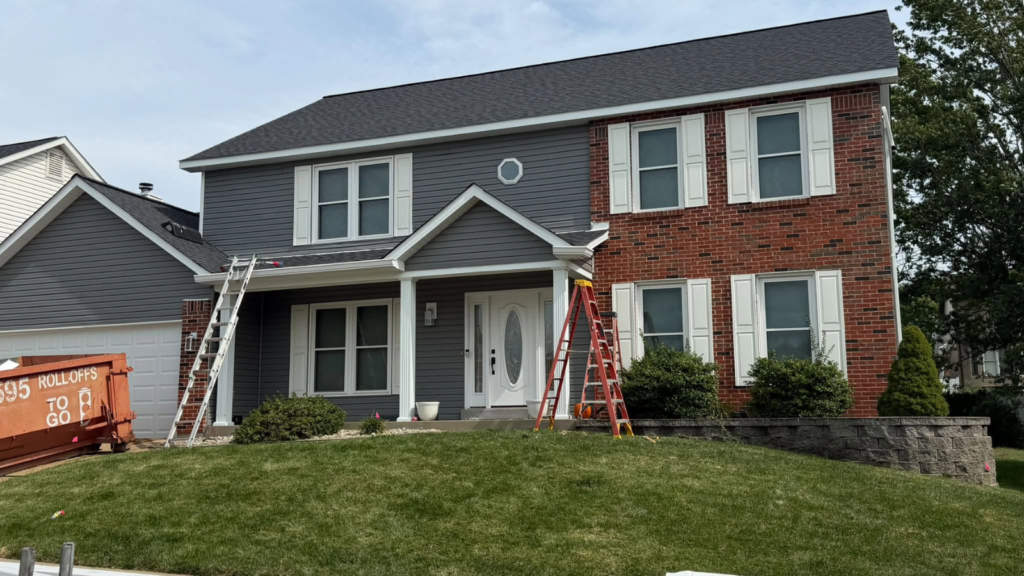
Hailstorms are a familiar concern for homeowners throughout Illinois and Missouri. When severe thunderstorms move through Columbia, Waterloo, Alton, or nearby communities, they can bring hail, strong winds, heavy rainfall, and flying debris. While some storms leave little more than scattered leaves and small dents on outdoor furniture, others can cause damage to roofing materials that may not be immediately visible.
After a hailstorm, homeowners often ask the same question: Should I schedule a roof inspection every time hail falls?
The answer depends on several factors, including hail size, storm intensity, roof age, roofing material, and whether there are visible signs of damage.
Not every hailstorm causes significant roofing problems. However, assuming your roof is fine simply because there are no leaks can be risky.
Understanding when a hail roof inspection Illinois homeowners need is appropriate can help you recognize potential damage, avoid unnecessary repairs, and protect your property from problems that may develop over time.
At Diamond Roofing & Exteriors, we serve homeowners throughout Columbia, Waterloo, Alton, Bethalto, Godfrey, Chesterfield, Crystal City, Farmington, Festus, Herculaneum, Hillsboro, Mehlville, Oakville, Pevely, St. Charles, and St. Peters.
Why Hailstorms Deserve Attention
Hail forms inside thunderstorms when strong upward air currents carry water droplets into colder regions of the atmosphere, where they freeze and grow.
When hailstones become too heavy to remain suspended, they fall toward the ground.
Hail can vary considerably in size, density, shape, and impact force.
Some hailstones are small and relatively harmless to roofing materials. Others can damage shingles, metal components, siding, gutters, and other exterior surfaces.
The amount of damage depends on more than hail size alone.
Wind speed, impact angle, roof material, existing wear, and the condition of the roofing system can all influence the outcome.
This is why two neighboring homes may experience different levels of damage during the same storm.
Should You Inspect Your Roof After Every Hailstorm?
A professional roof inspection is not automatically necessary after every minor hail event.
For example, a brief storm producing very small hail with no visible exterior damage may not justify an immediate professional inspection on an otherwise sound roof.
However, homeowners should still perform a safe visual check from the ground after significant weather.
Professional inspection becomes more important when:
- Hail was large or intense.
- Strong winds accompanied the storm.
- Nearby homes experienced visible damage.
- Gutters or downspouts show fresh dents.
- Shingles or roofing debris appear in the yard.
- The roof is older or already deteriorated.
- Interior leaks or moisture stains appear.
- A branch or other object struck the roof.
A hail roof inspection Illinois homeowners schedule should be based on the likelihood of damage rather than the presence of hail alone.
Why Hail Damage Is Not Always Obvious
One of the biggest challenges with hail damage is that it may not be visible from the ground.
Asphalt shingles can develop impact related damage without losing entire sections.
Some hail impacts may affect protective granules or the underlying shingle material.
Other impacts may create visible marks that do not compromise the roofing system.
Distinguishing between cosmetic marks and functional damage requires careful evaluation.
Homeowners should not assume that every dark spot indicates hail damage.
Likewise, the absence of obvious damage from the yard does not guarantee that the roof is unaffected.
Understanding Functional vs. Cosmetic Damage
Not every hail impact has the same significance.
Cosmetic damage generally refers to changes in appearance that do not materially affect the roofing component’s intended function.
Functional damage may interfere with the material’s ability to perform as intended.
For asphalt shingles, functional damage may involve compromised shingle material, fractures, or other impact related deterioration.
For certain metal roofing products, some dents may be primarily cosmetic, while more serious impacts can affect seams, coatings, fasteners, or other components.
The distinction depends on the material, damage characteristics, and applicable product considerations.
A professional evaluation helps homeowners avoid assuming that all hail marks require replacement.
How Hail Affects Asphalt Shingles
Asphalt shingles are common on residential properties throughout Illinois and Missouri.
They contain several layers and components that work together to shed water and protect the roof.
Hail impacts may affect:
- Protective granules
- Asphalt coating
- Reinforcing material
- Shingle surfaces
- Existing weakened areas
Some damage is immediately apparent.
Other concerns may require closer inspection.
A roofing professional can evaluate whether the observed marks are consistent with hail impact, normal aging, manufacturing characteristics, or another cause.
Granule Loss After Hail
Asphalt shingles contain protective granules that help shield the asphalt coating from sunlight and weather exposure.
Granules naturally loosen as roofing materials age.
However, hail can also dislodge granules.
Homeowners may notice granules near downspout outlets or inside gutters.
Granule accumulation alone does not prove that a roof has sustained functional hail damage.
A contractor should evaluate the shingles themselves and consider the roof’s age and overall condition.
If unusual granule loss appears after a significant storm, a hail roof inspection Illinois property owners request may help clarify the cause.
Bruising and Shingle Damage
Some hail impacts can affect the structure of asphalt shingles.
Depending on the product and impact, damage may involve cracking, fractures, or other changes to the shingle material.
A trained roofing professional may inspect suspected impact locations to determine whether the shingle has been compromised.
Homeowners should not attempt to diagnose these conditions by walking on the roof or pressing damaged areas themselves.
Doing so can create safety risks or additional material damage.
Can Hail Damage Cause Immediate Roof Leaks?
Yes, sufficiently severe hail damage can contribute to immediate water intrusion.
However, not every damaged roof begins leaking during the storm.
Some roofing systems may continue shedding water despite impact related damage.
This can create a false sense of security.
A roof that does not leak today may still contain damage requiring attention.
That is why inspection decisions should consider storm severity and visible exterior evidence rather than relying only on interior water stains.
Can Hail Damage Become Worse Over Time?
Certain types of functional hail damage may leave roofing materials more vulnerable to future weather exposure.
Wind, rain, temperature changes, and sunlight can affect already compromised materials.
However, homeowners should avoid assuming that every hail impact will inevitably develop into a leak.
The risk depends on the actual condition and type of damage.
Professional evaluation can help determine whether repairs, monitoring, or replacement are appropriate.
Signs You May Need a Hail Roof Inspection Illinois Homeowners Should Know
After a significant hailstorm, inspect your property safely from the ground.
Look for:
- Dented gutters
- Damaged downspouts
- Dents on metal roof vents
- Missing shingles
- Roofing debris
- Damaged siding
- Torn window screens
- Impact marks on exterior fixtures
- Fallen branches
- New interior stains
These signs do not automatically establish that the roof is damaged.
However, they can indicate that the storm was strong enough to justify a closer roofing evaluation.
Dented Gutters Can Provide Useful Clues
Gutters and downspouts are often easier to examine than shingles.
Hail may leave visible dents in metal surfaces.
Fresh dents can indicate the direction or intensity of impacts around the property.
However, metal gutters and asphalt shingles respond differently to hail.
A dented gutter does not automatically mean the shingles require replacement.
It is simply one piece of information that can support the decision to schedule an inspection.
Inspect Siding and Exterior Trim
Hail can affect more than roofing materials.
Depending on the material, homeowners may notice:
- Cracked siding
- Dents
- Chipped finishes
- Damaged trim
- Loose exterior components
If the siding shows fresh impact damage, the roof may also deserve evaluation.
A complete exterior inspection can help identify problems that might otherwise be overlooked.
Check Windows and Screens
Window screens can be damaged by hail and wind driven debris.
Exterior window frames and trim may also show impact marks.
Broken glass should be handled carefully.
If a storm caused damage to windows, siding, or gutters, consider whether the roofing system may have experienced similar exposure.
Look for Roof Debris in the Yard
Missing shingles or ridge cap materials may be found around the property after severe weather.
If you discover roofing debris, do not assume it came from a neighboring home.
Check your roof visually from the ground and consider contacting a professional.
Wind damage may accompany hail damage during the same storm.
Why Roof Age Matters After Hail
Roof age can influence how materials respond to severe weather.
An older roof may already have:
- Granule loss
- Cracking
- Curling
- Reduced flexibility
- Previous repairs
- Weather related deterioration
Hail can affect roofing materials differently depending on their existing condition.
A relatively new roof is not automatically immune to hail damage, and an older roof does not automatically require replacement after every storm.
The overall condition matters.
Why Roof Material Matters
Different roofing materials respond differently to hail.
Asphalt shingles, metal roofing, and other products have distinct characteristics.
A hail roof inspection Illinois homeowners arrange should account for the specific roofing system rather than using the same assumptions for every material.
Asphalt Shingles
Potential concerns include impact related fractures, granule displacement, and damage to the shingle structure.
Metal Roofing
Potential concerns include dents, coating damage, affected seams, and other component issues.
Some impacts may be cosmetic, while others may require corrective work.
Other Roofing Materials
Specialty roofing products may have different impact resistance ratings and inspection requirements.
Manufacturer specifications can provide useful information about the particular product.
Do Impact Resistant Shingles Prevent Hail Damage?
Some roofing products are tested for impact resistance.
These products may offer improved resistance under certain conditions.
However, an impact resistance rating does not mean the roof is guaranteed to withstand every hailstorm without damage.
Real storms involve different hail sizes, shapes, wind conditions, and impact angles.
Homeowners should review product specifications and warranty terms rather than assuming any roofing material is hailproof.
Does Hail Size Determine Whether Inspection Is Necessary?
Hail size is an important consideration, but it is not the only factor.
Larger hailstones generally create greater potential for damage, although actual outcomes vary.
Wind speed, hail density, impact angle, and roof condition can influence the result.
Homeowners may not know the exact hail size at their property.
If the storm produced significant exterior impacts, professional evaluation may be appropriate even without an official hail measurement.
How Wind Changes Hail Impact
Hailstorms may include strong winds that drive hailstones at an angle.
This can affect which roof slopes and exterior walls receive the strongest impacts.
Wind may also lift shingles or damage flashing independently of hail.
A complete inspection should consider both potential hail and wind damage.
Why Nearby Damage Matters
After a storm, homeowners may notice neighbors scheduling roofing inspections or making repairs.
Nearby damage can provide useful context.
However, one home’s condition does not determine another home’s damage.
Differences in roofing materials, roof orientation, age, tree coverage, and previous maintenance can influence the outcome.
Your own property should be evaluated based on its condition.
When Should You Schedule an Inspection?
If a significant hailstorm occurred and you suspect damage, arranging an inspection promptly is generally sensible.
Timely evaluation can help document conditions while the storm remains recent.
It may also identify roofing concerns before additional severe weather occurs.
Homeowners should not wait for a leak to appear if there is credible evidence of significant roof damage.
What Happens During a Professional Hail Inspection?
A professional roofing inspection may include examination of:
- Shingle surfaces
- Ridge caps
- Roof slopes
- Flashing
- Roof penetrations
- Gutters
- Downspouts
- Metal components
- Visible decking concerns
- Interior moisture evidence
The inspector may photograph findings and explain which conditions appear related to impact damage, normal aging, or other causes.
A good inspection should provide useful information rather than automatically recommending complete replacement.
Why Documentation Matters
Photographs and written observations can help establish the condition of the property after a storm.
Useful documentation may include:
- Date of the storm
- Visible exterior damage
- Interior moisture
- Roofing debris
- Contractor inspection findings
- Repair estimates
Keep these records with your home maintenance information.
If an insurance claim is involved, documentation may also help you communicate with the insurer.
Should You Contact Insurance Before a Roofer?
The appropriate order depends on the circumstances and your insurance policy.
If significant storm damage is visible, review your policy and contact your insurer as required.
A roofing contractor can also help assess the physical condition of the roof.
However, a contractor does not determine insurance coverage.
The insurer evaluates claims according to policy terms, evidence, exclusions, deductibles, and other applicable considerations.
Homeowners should avoid assuming that an inspection automatically requires filing a claim.
Does Every Hailstorm Justify an Insurance Claim?
No.
A hailstorm alone does not establish that a covered loss occurred.
Homeowners should first understand whether damage exists and whether a claim may be appropriate under their policy.
Filing decisions may involve:
- Extent of damage
- Repair costs
- Deductible
- Policy terms
- Insurer requirements
A roofing contractor can provide information about observed damage and repair needs, but coverage questions belong with the insurer.
Repair or Replace After Hail?
A hail damaged roof does not always need complete replacement.
Repair may be appropriate when damage is localized and surrounding materials remain serviceable.
Replacement may deserve consideration when functional damage is widespread or the roofing system has extensive deterioration.
The decision should consider:
- Damage extent
- Roof age
- Roofing material
- Repair history
- Decking condition
- Material compatibility
- Expected remaining service life
A hail roof inspection Illinois homeowners schedule should help clarify these factors.
What If the Roof Looks Fine?
If your roof appears normal after a minor hail event, and there are no other warning signs, monitoring may be reasonable.
However, homeowners should remember that ground level observations have limitations.
If the storm was particularly severe or other exterior components show damage, a closer evaluation may still be appropriate.
The absence of visible leaks is reassuring, but it is not a complete roof assessment.
What If the Inspector Finds No Damage?
A professional inspection may conclude that no storm related repairs are currently necessary.
That is a useful outcome.
Homeowners can keep the inspection documentation and continue routine maintenance.
A reputable contractor should not recommend replacement simply because hail occurred.
Avoid Unnecessary Roof Replacement
After major storms, homeowners may encounter aggressive sales approaches.
Be cautious of contractors who:
- Insist every hailstorm requires replacement
- Guarantee insurance approval
- Pressure you to sign immediately
- Refuse to explain inspection findings
- Provide vague estimates
- Recommend extensive work without identifying damage
A roofing recommendation should be based on actual property conditions.
Be Careful With Storm Chasers
Severe weather can attract contractors from outside the community.
Not every out of town contractor is unreliable, but homeowners should verify credentials, insurance, references, and business information before signing agreements.
Ask questions about:
- Installation practices
- Material specifications
- Workmanship warranties
- Project supervision
- Communication
- Post installation support
Choosing a contractor should involve more than accepting the first offer after a storm.
Why Local Roofing Experience Matters
Homes in Columbia and surrounding Illinois and Missouri communities experience thunderstorms, hail, wind, and seasonal temperature changes.
A local roofing contractor familiar with regional conditions can evaluate storm related concerns in the context of common roofing materials and weather exposure.
For homeowners searching for hail roof inspection Illinois services, local experience can help support informed repair and replacement decisions.
How Often Should You Have Your Roof Inspected?
There is no single inspection schedule that fits every roof.
Frequency depends on roof age, condition, material, previous damage, and weather exposure.
Homeowners should consider professional evaluation when:
- A significant storm occurs
- Leaks appear
- Shingles become damaged
- Flashing problems develop
- Roofing materials show deterioration
- The roof approaches an age where replacement may become necessary
Routine maintenance and timely evaluation can help identify concerns before they become more extensive.
Can You Inspect Your Own Roof?
Homeowners can safely perform a basic visual inspection from the ground.
Look for obvious exterior damage, roofing debris, and interior moisture.
However, walking on the roof is not recommended for most homeowners.
Roof surfaces may be steep, slippery, wet, or damaged.
Professional roofing contractors have equipment and training for closer evaluations.
Should You Use a Drone for Roof Inspection?
Drone photography may provide useful views of roof surfaces without requiring someone to walk on the roof.
However, photographs alone may not reveal every type of roofing damage.
Some conditions require closer examination.
Drone use must also comply with applicable aviation and property requirements.
A professional inspection may combine visual documentation with appropriate hands on evaluation when safe and necessary.
Hail Roof Inspection Illinois Homeowners: What to Expect From a Contractor
A roofing contractor should explain the inspection findings clearly.
You should understand:
- Whether damage was identified
- Where the damage is located
- Whether it appears functional or cosmetic
- Whether repair is appropriate
- Whether replacement should be considered
- What materials may be required
- What the estimated scope of work includes
Clear communication helps homeowners avoid unnecessary expenses and make informed decisions.
Questions to Ask Before Scheduling an Inspection
Before hiring a roofing contractor, ask:
- What areas of the roof will be inspected?
- Will you check gutters and other exterior components?
- Can you provide photographs of findings?
- How do you distinguish hail damage from normal wear?
- Will you explain repair and replacement options?
- Are you insured for the work you perform?
- What happens if no damage is found?
- Can you provide a written estimate if repairs are needed?
These questions can help you evaluate whether the contractor offers a thorough and professional service.
What to Do Immediately After a Severe Hailstorm
If your home has experienced significant hail, follow these steps:
- Prioritize safety. Stay away from downed power lines, unstable branches, and damaged structures.
- Inspect from the ground. Look for missing shingles, damaged gutters, and exterior impacts.
- Check inside. Examine ceilings and accessible attic areas for moisture.
- Take photographs. Document visible damage when safe.
- Protect exposed areas. Seek professional help if emergency protection is necessary.
- Schedule an inspection. Arrange professional evaluation when significant damage is suspected.
- Review insurance requirements. Follow your policy’s applicable notification procedures.
- Discuss repair options. Base decisions on inspection findings rather than assumptions.
Following these steps can help you respond appropriately without rushing into unnecessary work.
How Gutters Help Reveal Storm Severity
Gutters and downspouts can provide clues about hail exposure.
Because they are often made from relatively thin metal, impact marks may be easier to see.
However, gutter dents do not automatically indicate shingle damage.
A professional should examine the roofing materials directly before recommending repairs.
Inspect Soffit and Fascia After Hail
Hailstorms often include strong winds and heavy rainfall.
These conditions can affect soffit and fascia even when hail itself does not directly damage them.
Look for:
- Loose soffit panels
- Damaged fascia
- Hanging gutters
- Water staining
- Missing exterior components
A complete exterior assessment can identify connected problems that may affect drainage or roof edge protection.
Why You Should Not Wait for Ceiling Stains
Ceiling stains indicate that moisture has reached interior materials.
By that point, water may already have traveled through parts of the roofing system.
A significant hailstorm does not always produce immediate leaks, so waiting for interior evidence may delay necessary evaluation.
If credible signs of roof damage exist, inspection can help identify concerns earlier.
Hail Damage and Long Term Roof Performance
A roofing system is designed to protect the home through changing weather.
Functional hail damage may affect that performance.
However, the long term impact depends on the type and extent of damage.
Not every impact mark reduces the roof’s useful life.
A professional assessment should distinguish actual roofing concerns from superficial changes.
Why Preventive Maintenance Still Matters
Routine maintenance can help homeowners recognize changes in roof condition.
Helpful practices include:
- Keeping gutters clear
- Monitoring shingle condition
- Checking flashing
- Inspecting accessible attic areas
- Addressing leaks promptly
- Trimming hazardous branches
- Scheduling evaluations after significant storms
Maintenance cannot prevent hail, but it can help identify vulnerabilities before additional weather exposure occurs.
Serving Illinois and Missouri Homeowners
Diamond Roofing & Exteriors serves homeowners throughout Columbia, Waterloo, Alton, Bethalto, Godfrey, Chesterfield, Crystal City, Farmington, Festus, Herculaneum, Hillsboro, Mehlville, Oakville, Pevely, St. Charles, and St. Peters.
Whether you experienced hail in Columbia, wind driven rain in Waterloo, or a severe thunderstorm in the greater St. Louis area, the same principle applies.
Not every hailstorm requires extensive roofing work.
However, significant weather should not be ignored when there are signs of possible damage.
A hail roof inspection Illinois homeowners request can help clarify whether their roofing system remains serviceable or needs attention.
Why Choose Diamond Roofing & Exteriors?
At Diamond Roofing & Exteriors, we understand that homeowners want clear answers after severe weather.
You should know whether your roof sustained damage, what areas were affected, and what options are appropriate.
Our services include:
- Roof inspections
- Roof repair
- Roof replacement
- Storm damage restoration
- Metal roofing
- Vinyl siding
- Gutters
- Exterior solutions
When evaluating storm damage, our goal is to consider the overall condition of the roofing and exterior system.
A hailstorm may affect shingles, gutters, siding, flashing, or other components.
Understanding how those elements work together can help homeowners make informed decisions about repair and restoration.
If you are considering a hail roof inspection Illinois homeowners can arrange following severe weather, our team can help evaluate visible roofing concerns and discuss appropriate next steps.
Final Thoughts: Should You Inspect Your Roof After Every Hailstorm?
Not every hailstorm requires a professional roof inspection.
A brief event with small hail and no visible exterior damage may not justify immediate professional evaluation, especially when the roof is relatively new and in good condition.
However, significant hail, strong winds, damaged gutters, roofing debris, or interior moisture should prompt closer attention.
The most important factor is the likelihood of actual damage.
Homeowners should not assume that every hail impact means roof replacement is necessary.
At the same time, they should not assume that a roof is undamaged simply because no leaks are visible.
A professional hail roof inspection Illinois homeowners schedule after a significant storm can help identify functional damage, distinguish storm related concerns from normal aging, and determine whether repair or replacement is appropriate.
For homeowners throughout Columbia, Waterloo, Alton, Bethalto, Godfrey, Chesterfield, Crystal City, Farmington, Festus, Herculaneum, Hillsboro, Mehlville, Oakville, Pevely, St. Charles, and St. Peters, timely evaluation can help protect roofing systems from unresolved problems.
If your property has experienced significant hail or you have noticed new roofing concerns after a storm, contact Diamond Roofing & Exteriors to discuss a professional inspection.
Protect your home with dependable roofing and storm damage restoration services from Diamond Roofing & Exteriors in Columbia, Illinois.
