
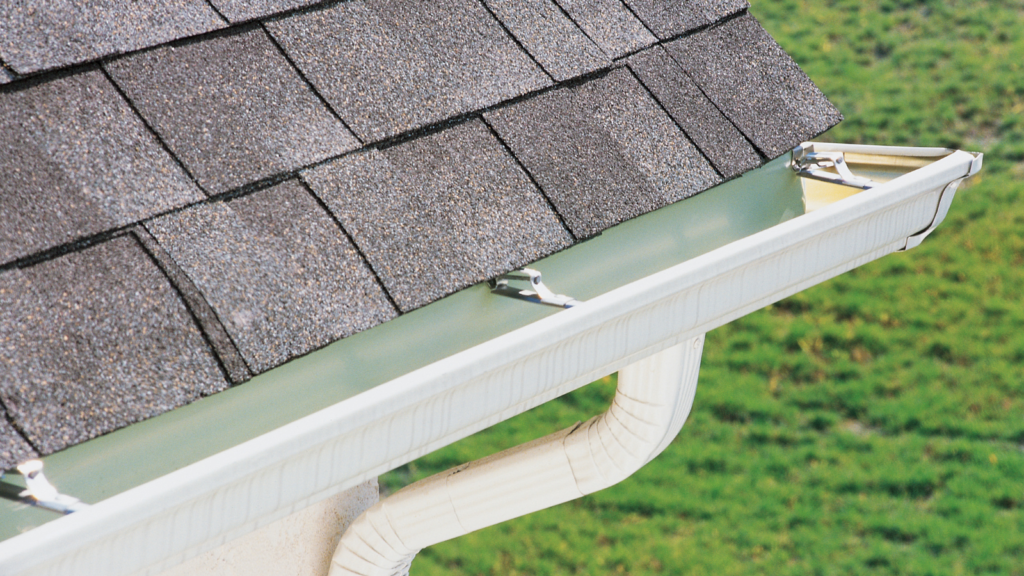
Rain gutters are one of the most overlooked components of a home’s exterior. While homeowners often focus on roofing materials, siding, and windows, gutters play an essential role in managing rainwater and directing it away from vulnerable areas.
However, simply having gutters installed is not enough. Their position, alignment, slope, and connection to downspouts determine how effectively they move water.
A gutter that appears straight may actually need a slight pitch to encourage drainage. If the slope is incorrect, water can accumulate, overflow, or flow away from the intended downspout.
Understanding gutter slope importance can help homeowners prevent avoidable moisture problems, protect exterior materials, and recognize when their drainage system needs professional attention.
At Diamond Roofing & Exteriors, we serve homeowners throughout Columbia, Waterloo, Alton, Bethalto, Godfrey, Chesterfield, Crystal City, Farmington, Festus, Herculaneum, Hillsboro, Mehlville, Oakville, Pevely, St. Charles, and St. Peters.
Our region experiences thunderstorms, heavy rainfall, seasonal temperature changes, and winter freezing conditions. These weather patterns make proper roof drainage particularly important.
What Is a Gutter Slope?
Gutter slope, also called gutter pitch, refers to the slight downward angle of a gutter toward its intended downspout.
Although gutters may appear level from the ground, many systems are installed with a gradual slope to help water move toward drainage outlets.
Without sufficient slope, water may remain inside the gutter.
If the slope directs water away from the downspout, drainage may become ineffective.
The appropriate pitch depends on factors such as gutter length, system design, outlet placement, and manufacturer requirements.
Proper gutter slope helps water move efficiently without creating an unnecessarily noticeable angle along the roofline.
Understanding Gutter Slope Importance
The primary purpose of gutters is to collect runoff from the roof and guide it toward downspouts.
The downspouts then carry water toward an appropriate discharge location.
Slope supports this process by allowing gravity to move water through the gutter channel.
When the pitch is appropriate, water can flow toward the outlet rather than collecting in low areas.
When the pitch is incorrect, several problems may develop:
- Standing water
- Overflow
- Debris accumulation
- Excessive gutter weight
- Increased leakage at seams
- Moisture exposure near fascia
- Ineffective drainage
Understanding gutter slope importance helps homeowners see why proper installation matters just as much as gutter material or appearance.
How Gravity Affects Gutter Drainage
Gutters generally rely on gravity to move water.
Rainwater enters the gutter along the roof edge and flows toward the downspout.
A properly designed system provides a drainage path that encourages water movement.
However, slope is not the only factor.
Drainage also depends on:
- Gutter capacity
- Downspout size
- Outlet location
- Debris accumulation
- Roof drainage area
- Rainfall intensity
Even a properly pitched gutter can overflow during exceptionally heavy rainfall if the system is undersized or obstructed.
A complete drainage evaluation should consider all of these factors.
How Much Slope Should Gutters Have?
A commonly referenced starting guideline for residential gutters is approximately one quarter inch of fall for every 10 feet of gutter length.
For example, a 20 foot gutter run using that guideline would have approximately one half inch of total fall toward the downspout.
However, this is not a universal requirement.
The correct slope can vary based on the gutter system, manufacturer instructions, local conditions, and drainage design.
Long gutter runs or multiple downspout arrangements may require a different configuration.
Professional installers should determine the appropriate pitch for the specific property.
Why Gutters Should Not Be Completely Level
A gutter that is perfectly level may allow water to remain in certain sections.
Small variations in the gutter, fascia, or mounting surface can create low points.
These areas may collect water after rainfall.
Standing water can contribute to:
- Debris buildup
- Additional weight
- Insect activity
- Seam leakage
- Corrosion in susceptible materials
A slight, intentional pitch helps reduce these concerns.
This is one of the most practical examples of gutter slope importance for homeowners.
What Happens When Gutters Slope the Wrong Way?
A gutter pitched away from its intended downspout can create significant drainage problems.
Instead of moving toward the outlet, water may collect at the opposite end.
During heavy rainfall, that area may overflow.
Water may then reach siding, fascia, landscaping, or other exterior surfaces.
In some situations, homeowners may notice water spilling from a gutter even though the downspout itself is clear.
Incorrect pitch should be considered as a possible cause.
Standing Water Is a Warning Sign
After rainfall, gutters should generally drain rather than retain substantial amounts of water.
Small residual amounts may remain because of gutter shape or surface conditions.
However, persistent pools of water can indicate:
- Incorrect slope
- Sagging sections
- Debris obstruction
- Improper outlet placement
- Deformed gutter channels
Homeowners should not climb ladders simply to check for standing water.
If you suspect drainage problems, a professional can inspect the system safely.
Why Standing Water Can Become a Problem
Water adds weight to the gutter system.
When gutters repeatedly hold unnecessary amounts of water, the additional load may place stress on hangers, fasteners, and fascia.
The effect depends on the gutter’s material, support spacing, and condition.
Standing water may also contribute to debris accumulation and deterioration of vulnerable components.
Correcting drainage problems early can help reduce these risks.
Gutter Overflow and Exterior Water Damage
Overflow is one of the most visible signs of gutter trouble.
During rainfall, water may spill over the front or back of the gutter instead of entering the downspout.
Possible causes include:
- Clogs
- Incorrect slope
- Insufficient capacity
- Improper installation
- Damaged sections
- Downspout restrictions
Overflowing gutters can expose exterior materials to repeated moisture.
Understanding gutter slope importance helps homeowners recognize that cleaning alone may not solve every overflow problem.
How Poor Gutter Slope Affects Fascia
Fascia runs along the roof edge and commonly provides an attachment surface for gutters.
If water repeatedly overflows behind the gutter, fascia may experience excessive moisture exposure.
Depending on the material, this can contribute to:
- Paint deterioration
- Discoloration
- Softening
- Rot
- Fastener problems
A gutter that pulls away from deteriorated fascia may create additional drainage concerns.
Proper slope and secure attachment help protect the roof perimeter.
How Improper Drainage Affects Soffit
Soffit covers the underside of roof overhangs.
When gutters overflow or water moves behind the roof edge, soffit materials may become exposed to moisture.
Homeowners may notice staining, loose panels, or deterioration.
Some soffit systems also contain attic ventilation openings.
Damaged soffit can therefore affect both exterior protection and ventilation components.
Correcting the water source is essential before repairing damaged materials.
Siding Can Be Affected by Gutter Overflow
Water spilling from gutters may repeatedly strike siding.
Over time, excessive moisture exposure can contribute to staining or deterioration, depending on the siding material and installation details.
Water may also enter behind damaged or improperly sealed exterior components.
Homeowners should look for unusual streaks, peeling paint, or persistent damp areas beneath overflowing gutters.
Why Foundation Drainage Matters
One of the most important functions of gutters is directing roof runoff away from vulnerable foundation areas.
When gutters overflow, water may collect near the base of the home.
Depending on grading, soil conditions, drainage systems, and foundation design, repeated water accumulation can contribute to moisture concerns.
Gutters do not replace proper site grading or foundation drainage.
However, they are an important part of managing roof runoff.
This connection illustrates gutter slope importance beyond the roofline.
Landscaping and Soil Erosion
Water spilling from gutters can strike the ground with considerable force during heavy rainfall.
This may disturb mulch, wash away soil, or create erosion near landscaping.
Flower beds directly beneath roof edges can be particularly vulnerable.
A properly functioning gutter and downspout system helps direct runoff toward intended drainage areas.
Basement and Crawl Space Moisture
Poor drainage around a home can contribute to basement or crawl space moisture under certain conditions.
Gutter overflow may be one contributing factor.
However, moisture in these areas can also involve grading, groundwater, foundation conditions, plumbing, or other sources.
Homeowners should avoid assuming that adjusting gutter slope will automatically solve every basement water problem.
A comprehensive drainage evaluation may be necessary.
Gutter Slope Importance During Heavy Illinois and Missouri Rainfall
Homes in Columbia and surrounding communities may experience intense thunderstorms.
During heavy rain, large volumes of roof runoff can enter gutters quickly.
If the system has low spots or inadequate pitch, water movement may become less efficient.
However, even correctly sloped gutters can overflow if rainfall exceeds system capacity.
A properly designed system should account for roof area, drainage outlets, and expected rainfall conditions.
Professional installation helps ensure that gutter slope works together with the rest of the drainage design.
Why Downspout Placement Matters
Downspouts provide the outlets through which gutter water exits.
A gutter’s slope should direct runoff toward these outlets.
If downspouts are poorly positioned, long gutter sections may struggle to drain effectively.
Some systems may benefit from multiple downspouts or drainage toward outlets at different ends.
The correct arrangement depends on roof size, gutter length, and other design factors.
Long Gutter Runs Need Careful Planning
Long gutter sections can be more challenging to pitch correctly.
A small change in slope over a long distance can create a noticeable height difference.
Installers must balance drainage performance with proper attachment and appearance.
In some cases, dividing a long gutter run between multiple outlets may provide a better solution.
This is another reason gutter slope importance should be evaluated during system design rather than treated as an afterthought.
Why Gutter Size Matters
Gutters must have enough capacity to manage runoff from the roof.
Common residential systems use different gutter sizes and profiles.
The appropriate size depends on:
- Roof area
- Roof pitch
- Drainage layout
- Rainfall intensity
- Downspout capacity
A gutter with perfect slope may still overflow if it is too small for the amount of water entering it.
Professional gutter planning should consider both pitch and capacity.
How Gutter Material Influences Performance
Residential gutters may be made from aluminum, steel, copper, or other materials.
Each has different characteristics related to weight, durability, maintenance, and appearance.
Regardless of material, the system needs appropriate support and drainage.
Some materials may be more vulnerable to corrosion when water remains trapped.
Others may resist corrosion but still experience sagging or attachment problems.
Correct pitch is important across gutter types.
Seamless Gutters and Proper Pitch
Seamless gutters are formed in continuous sections to reduce the number of joints along the gutter run.
Fewer joints can reduce potential leakage locations.
However, seamless construction does not eliminate the need for correct slope.
A seamless gutter installed with improper pitch can still hold water or overflow.
Installation quality remains essential.
How Sagging Gutters Affect Drainage
Sagging sections can create unintended low points.
These may develop because of:
- Loose hangers
- Damaged fascia
- Excessive debris
- Snow or ice loads
- Falling branches
- Poor installation
When a gutter sags, its original slope may no longer direct water effectively.
Homeowners should look for uneven gutter lines and visible separation from the roof edge.
Storm Damage Can Change Gutter Slope
Strong winds, hail, and falling branches can affect gutter alignment.
A branch impact may bend a section.
Wind may loosen attachments.
Heavy debris can place additional weight on the system.
After severe weather, homeowners should check gutters from the ground for obvious changes.
Even when a gutter remains attached, its drainage performance may have changed.
Winter Weather and Gutter Slope Importance
Winter introduces additional drainage concerns.
Snow and ice can accumulate along roof edges and within gutters.
When temperatures rise, melting snow needs a clear drainage path.
Incorrect slope or existing clogs may allow water to remain in the gutter.
That water can freeze again when temperatures drop.
Repeated freezing conditions can place additional stress on vulnerable gutter components.
Proper pitch supports drainage, but it does not eliminate every winter roofing problem.
Can Poor Gutter Slope Cause Ice Dams?
Ice dams develop through a combination of roof temperature conditions, snow melt, freezing weather, and roof design.
Attic insulation, air sealing, and ventilation may contribute to the conditions that allow ice dams to form.
Poor gutter drainage can create additional ice accumulation in the gutter system.
However, incorrect gutter slope is not the sole cause of roof ice dams.
Homeowners experiencing recurring ice dams should have the broader roof and attic system evaluated.
Leaves and Debris Make Poor Slope Worse
During fall, gutters can collect leaves and other debris.
When a gutter already has low spots, debris may accumulate more easily in those areas.
The combination of standing water and organic material can interfere with drainage.
Routine cleaning helps, but recurring standing water after cleaning may indicate a slope or alignment problem.
Can Gutter Guards Fix Poor Slope?
Gutter guards are designed to reduce the amount of certain debris entering gutters.
They may help with maintenance, depending on the product and surrounding conditions.
However, gutter guards do not correct improper pitch.
A gutter with incorrect slope may continue holding water even when debris accumulation is reduced.
Drainage problems should be addressed before assuming a guard system will solve them.
Signs Your Gutters May Have Incorrect Slope
Homeowners should watch for:
- Standing water after rainfall
- Overflow near one end
- Sagging gutter sections
- Water dripping behind gutters
- Repeated seam leaks
- Loose attachments
- Debris collecting in the same area
- Uneven gutter alignment
- Water stains on fascia
- Erosion beneath roof edges
These signs may indicate incorrect pitch, although other drainage problems can produce similar symptoms.
A professional evaluation can identify the actual cause.
How Professionals Check Gutter Pitch
A gutter contractor may inspect:
- Existing gutter alignment
- Attachment points
- Fascia condition
- Downspout locations
- Gutter length
- Drainage capacity
- Visible low spots
Appropriate measuring tools can help determine whether the system has the intended fall toward its outlets.
The contractor should also evaluate whether clogs, damaged sections, or inadequate capacity are contributing to the problem.
Can You Adjust Gutter Slope Yourself?
Some gutter adjustments may appear straightforward.
However, the work often involves ladders, roof edges, fasteners, and long sections of material.
Improper adjustments can create new drainage problems or damage fascia.
For most homeowners, professional evaluation is the safer option.
Avoid climbing onto the roof or working from unstable ladders.
When Gutter Repair Is Enough
Repair may be appropriate when:
- Damage is localized
- The gutter material remains sound
- Most attachments are secure
- Fascia remains serviceable
- Proper drainage can be restored
Repairs may involve adjusting hangers, correcting alignment, replacing damaged sections, or addressing outlet problems.
The appropriate work depends on the actual cause.
When Gutter Replacement Makes More Sense
Replacement may deserve consideration when:
- Multiple sections are damaged
- Gutters repeatedly sag
- Corrosion or deterioration is widespread
- Existing capacity is inadequate
- Drainage problems are difficult to correct
- The system has extensive storm damage
Replacing gutters provides an opportunity to review the complete drainage design.
This includes slope, gutter size, downspout placement, and discharge locations.
Why Fascia Should Be Checked Before Gutter Installation
Gutters are often attached to fascia.
If fascia is deteriorated, it may not provide adequate support for new or adjusted gutters.
Installing new gutters over damaged supporting materials can lead to recurring attachment problems.
A professional should evaluate fascia condition before completing the installation.
The Relationship Between Roofing and Gutters
Roofing and gutters work together to manage rainwater.
Shingles and other roofing materials direct water toward the roof edge.
Gutters collect that runoff.
Downspouts move water toward discharge areas.
If any part of the system is compromised, water management may become less effective.
This is why gutter slope importance should be considered as part of overall roof and exterior maintenance.
Gutter Slope During Roof Replacement
Roof replacement can provide a useful opportunity to inspect gutters and roof edge components.
Homeowners may choose to evaluate:
- Gutter alignment
- Fascia condition
- Drip edge details
- Downspout placement
- Drainage capacity
- Existing damage
Not every roof replacement requires new gutters.
However, identifying drainage concerns during roofing work can help prevent problems from remaining unresolved.
How Proper Gutter Slope Supports Curb Appeal
Gutters are visible components of the exterior.
Poorly aligned or sagging sections can affect the home’s appearance.
A properly installed system should provide an orderly roofline while directing water effectively.
Appearance should not come at the expense of function.
The ideal gutter installation balances visual alignment with appropriate drainage.
Routine Gutter Maintenance Tips
Homeowners can help maintain gutter performance by:
- Checking gutters after major storms.
- Watching for overflow during rainfall.
- Keeping downspout outlets clear.
- Removing debris through safe methods.
- Looking for loose sections.
- Monitoring fascia for water stains.
- Checking discharge areas for erosion.
- Scheduling professional service when drainage problems persist.
Routine maintenance helps identify problems before they affect surrounding exterior materials.
How Often Should Gutters Be Inspected?
Inspection frequency depends on the property’s conditions.
Homes surrounded by mature trees may require more frequent attention.
Properties exposed to significant storms may also benefit from additional checks.
Homeowners should inspect gutters after major weather events and monitor drainage throughout the year.
If water repeatedly overflows or sections begin sagging, professional evaluation is appropriate.
Common Gutter Installation Mistakes
Several installation mistakes can affect drainage performance.
These include:
- Incorrect slope
- Inadequate support
- Poor downspout placement
- Undersized gutters
- Improper attachment
- Failure to address damaged fascia
- Poorly connected sections
A professionally designed system should account for the roof’s drainage needs rather than relying on appearance alone.
Why Professional Gutter Installation Matters
Correct gutter installation requires more than attaching channels along the roof edge.
A contractor must consider how water moves across the roof, enters the gutter, and exits through downspouts.
Proper installation should account for:
- Roof drainage area
- Gutter size
- Appropriate pitch
- Attachment strength
- Fascia condition
- Outlet placement
- Water discharge
Understanding gutter slope importance helps homeowners recognize why professional workmanship is essential.
Questions to Ask Your Gutter Contractor
Before approving gutter work, ask:
- Is my current gutter slope correct?
- Are the downspouts properly positioned?
- Is the system large enough for my roof?
- Are there any damaged sections?
- Is the fascia in good condition?
- Can the existing gutters be adjusted?
- Would replacement improve drainage?
- How will runoff be directed away from the home?
Clear answers can help you make informed decisions about gutter maintenance or replacement.
Gutter Slope Importance for Illinois and Missouri Homeowners
Homes throughout Columbia and surrounding communities experience changing weather conditions.
Heavy rainfall can expose drainage weaknesses.
Fall leaves can clog gutters.
Winter freezing conditions can affect systems that retain water.
Strong winds and falling branches can damage gutter attachments.
These conditions make proper installation and maintenance important throughout the year.
Homeowners should not assume that a gutter system is functioning correctly simply because it remains attached to the house.
The way water moves through the system matters.
Serving Columbia and Surrounding Communities
Diamond Roofing & Exteriors serves homeowners throughout Columbia, Waterloo, Alton, Bethalto, Godfrey, Chesterfield, Crystal City, Farmington, Festus, Herculaneum, Hillsboro, Mehlville, Oakville, Pevely, St. Charles, and St. Peters.
Whether your home has experienced overflowing gutters in Columbia, sagging sections in Waterloo, storm damage in Festus, or drainage concerns elsewhere in our service area, proper evaluation can help identify the underlying problem.
Understanding gutter slope importance is useful for homeowners across both Illinois and Missouri because effective roof drainage is essential regardless of location.
Why Choose Diamond Roofing & Exteriors?
At Diamond Roofing & Exteriors, we understand that protecting a home requires attention to more than the roofing materials.
Gutters, fascia, soffit, siding, and roof edge details all contribute to exterior performance.
Our services include:
- Roof inspections
- Roof repairs
- Roof replacement
- Storm damage restoration
- Metal roofing
- Vinyl siding
- Gutters
- Exterior solutions
When evaluating gutter concerns, our goal is to consider how the drainage system works with the roof and surrounding exterior materials.
A sagging gutter may indicate an attachment problem.
Water overflowing behind a gutter may involve roof edge details or fascia.
Standing water may result from improper pitch or an obstruction.
Identifying the actual cause helps determine whether repair, adjustment, or replacement is appropriate.
Final Thoughts
Gutters may seem like simple exterior components, but their effectiveness depends on proper design and installation.
A slight slope can make an important difference in how water travels toward downspouts.
When gutters are incorrectly pitched, water may accumulate, overflow, or reach areas that should remain protected.
Understanding gutter slope importance helps homeowners recognize why gutter alignment matters.
However, slope is only one part of an effective drainage system.
Gutter capacity, downspout placement, attachment strength, roof drainage area, and maintenance also influence performance.
A gutter with proper pitch can still overflow if it is clogged or undersized.
Likewise, a clean gutter may retain water if it has sagged or been installed with incorrect alignment.
Homeowners should monitor their drainage systems during rainfall and after major storms.
Watch for overflowing water, standing water, sagging sections, fascia stains, and erosion near the foundation.
These warning signs may indicate that the system needs attention.
For homeowners in Columbia, Waterloo, Alton, Bethalto, Godfrey, Chesterfield, Crystal City, Farmington, Festus, Herculaneum, Hillsboro, Mehlville, Oakville, Pevely, St. Charles, and St. Peters, maintaining proper gutter drainage is an important part of protecting the home from unnecessary moisture exposure.
If your gutters overflow, sag, leak, or hold water after rainfall, contact Diamond Roofing & Exteriors to discuss a professional evaluation.
Our team can help identify visible concerns and recommend appropriate gutter repair or replacement solutions based on your property’s needs.
Protect your roofline, siding, landscaping, and foundation areas with properly functioning gutters from Diamond Roofing & Exteriors in Columbia, Illinois.
